
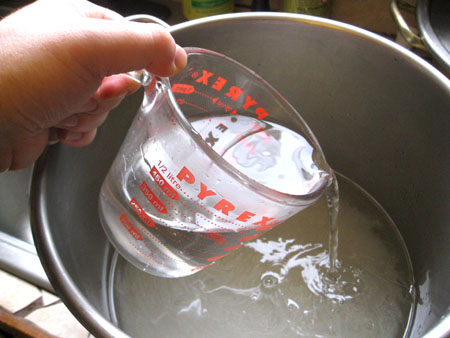
Sugar syrup is used primarily in canning fruits. It’s easy and fast to make. I will list the different strengths of syrup you may want to make for different projects and the approximate yield. Deciding how much you need for a given recipe is (I’ve found) a guessing game. There are a lot of variables such as how much fruit you put in each jar, whether the fruit is diced or in large chunks, and how many jars you end up filling which depends on the same variables. When I am going to can a big batch of peaches or pears I start off making a triple batch of syrup because I nearly always need at least that much. If you run out in the middle of your project it is very easy to make more. So don’t let yourself get too worried. If you make too much you can store the extra syrup in the fridge indefinitely or if you prefer you can put the extra in a jar and can it to use later.
I have never used a heavy syrup for my peaches and pears. I usually use either a light or an extra light syrup. The sugar syrup helps to maintain the fruit quality and color as it sits in your pantry. You can also use fruit juice or plain water, but I prefer the more traditional sugar syrup. It is all a matter for your personal preference.
General instructions:
1. Choose a pot that will acomodate the quantity of syrup you are going to make.
2. Measure the sugar into the pot.
3. Measure the corresponding amount of water into the pot and stir really well.
4. Put it on the stove on high heat and bring it to a boil while stirring it.
5. By the time it comes to a boil the sugar should be well dissolved, it is ready for use.
List of syrup types and the ratio of water to sugar for each one:
Type of syrup: % of sugar Sugar Water Yield of syrup
Extra-Light 20 1 1/4 cups 5 1/2 cups 6 cups
Light 30 2 1/4 cups 5 1/4 cups 6 1/2 cups
Medium 40 3 1/4 cups 5 cups 7 cups
Heavy 50 4 1/4 cups 4 1/4 cups 7 cups
Category Archives: Canning and Preserving
Tomatoes: Skinning And Seeding
No matter what you plan to do with your glut of tomatoes, you will need to process them first. There are many ways of preparing them and Stitch and Boots will work to compile a number of different methods. This one is a classic and is called for in many canning preparations such as making sauces, juice, and salsas.
Peeling and seeding your tomatoes is ideal if you’re going to make sauce, salsa, or can diced tomatoes. I didn’t use to think it was necessary to peel or seed my tomatoes (thinking it was a colossal waste of time…) until I made my very first batch of tomato sauce without doing either. The seeds are juicy and covered in a gelatinous membrane that doesn’t reduce when being cooked so that a sauce that’s full of them doesn’t ever get that pleasing thick consistency that is the ideal. I know this because I’ve done it! Similarly, if you you don’t peel your diced tomatoes you will end up with curls of peel floating in your soup or your casserole which, while not the end of the world, will prevent your food from reaching a state of excellence.
Peeling and seeding your tomatoes does take some time, but is not at all difficult to do. You’re going to need:
1. A large pot of water.
2. A slotted spoon to place and remove tomatoes from the boiling water.
3. Paring knife.
4. Lots of ice to put in a big bowl.
5. (And a big bowl.)
- I never buy sprayed tomatoes so I don’t wash them first. They are going to be boiled and skinned so a little dirt isn’t a concern. However, if your tomatoes are especially dirty, muddy, or coated in pesticides, you will want to wash them first.
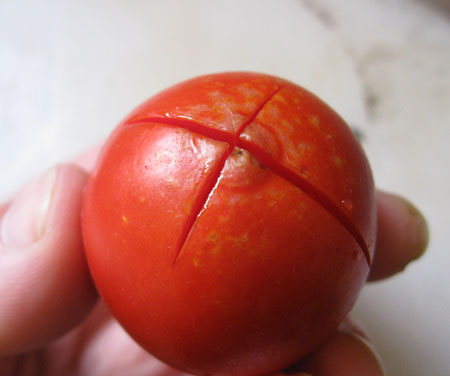
- Before you set your water to bowl or put the ice out you will want to score the blossom ends of all your tomatoes. Simply use your paring knife to cut an “x” in the skin. This will help you slide the skins off easily after blanching the fruits.
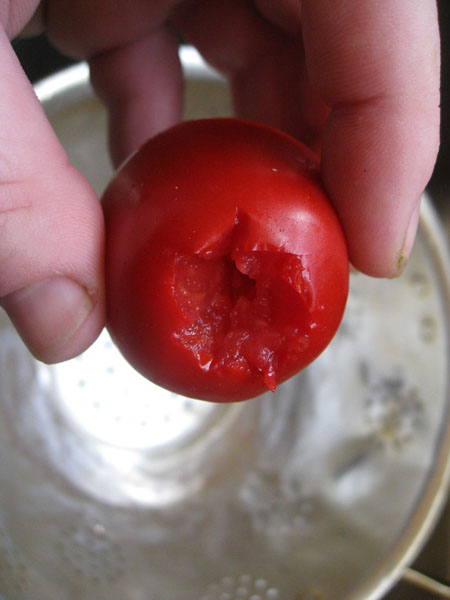
- Then you want to core them all. Some roma tomatoes barely have a core and in this case you may just want to slice the very end off. If the tomatoes are a little tough further down, definitely core them. I usually core and score each tomato but you can do all the scoring first and then all the coring- whichever way seems the most streamlined to you.
- When you get 3/4 of your tomatoes cored and scored, put the pot of water on to boil. Then fill a bowl with ice and some cold water.
- When the water is boiling and your tomatoes are all prepared, put a few tomatoes in the pot at a time. If you are processing slicing tomatoes only put 2 or 3 in the pot at a time, if you are processing romas, put about 6 of them in the pot at a time. If you put too many in the pot at once it will bring the temperature of the water down so far that it will not start boiling again for longer than you want your tomatoes in the hot water. When you see the water recover to a boil you let the tomatoes blanch for 30-60* seconds. It is good to gently stir them with your spoon to make sure all the skin surface of the tomatoes has been submerged.
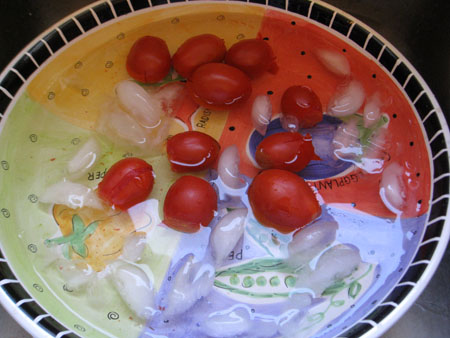
- Remove each batch from the boiling water straight into the ice bath. Let them cool down while you put more tomatoes in the pot. Then remove the cooler ones and put on your counter or in another large bowl. I like to get all of them blanched before working on slipping the skins off and seeding.
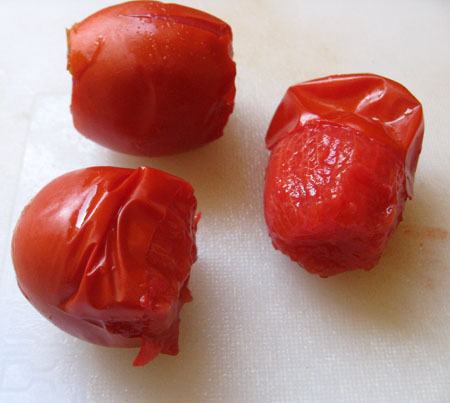
- Once all your tomatoes are blanched, slip their skins off. Now put the tomato in the palm of your hand, over the sink or a compost bucket and gently squeeze until most of the seeds have come out. This can be messy so wearing an apron is recommended. Don’t worry about getting all of the seeds out. Just concentrate on getting the bulk of them out.
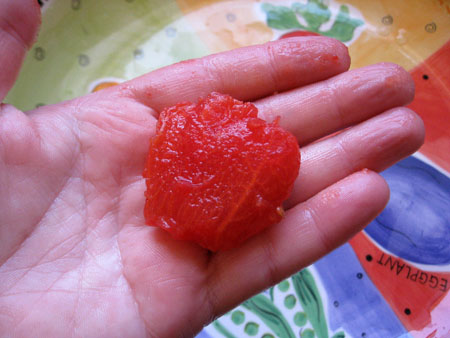
- When you have squeezed the seeds out your tomatoes will be a little flat. This makes them easy to chop. Now you’re done. You can either chop them for salsa, sauce, or freezing for later, or you can leave them whole.
It takes some time to process tomatoes but you will find that there are circumstances where you will be well rewarded by your efforts!
*An exact time isn’t important. If you do a search for information on how to peel tomatoes, you will find all different times being recommended. 15 seconds may not be enough to loosen the skins, and you definitely don’t want your tomatoes boiling for more than 60 seconds or they will really start cooking and breaking down. Start off timing yourself for about 30 seconds. Once you have a feel for it, don’t worry too much.
Homemade Ricotta
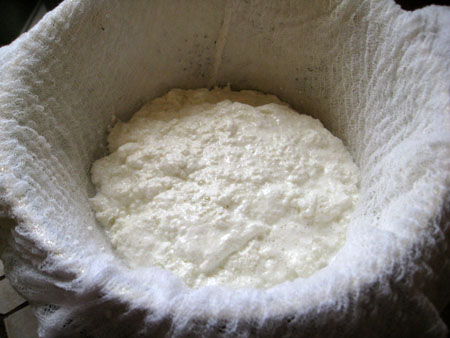
This is the finished batch of ricotta.
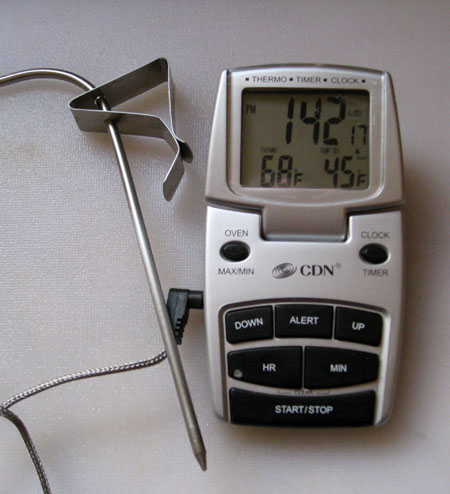
This is the thermometer I use. You can use any model that allows you to clip it to the side of your pot so that the gauge is in the milk at all times.
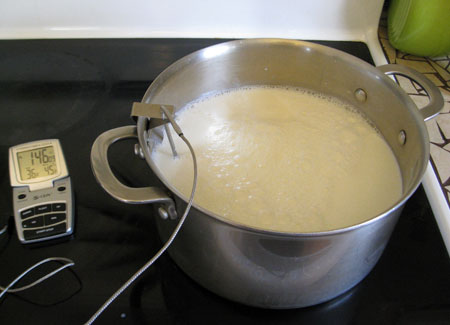
Like this.
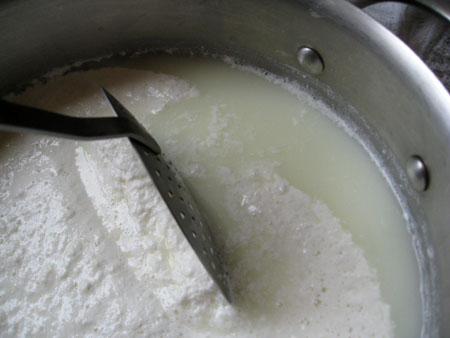
This is how your milk should look when it has set for ten minutes.
Making your own ricotta is very easy, doesn’t require expensive equipment, tastes better than store bought, and as though that weren’t enough- it’s possible to make it for half the price of store bought ricotta. The cost is highly dependent on the milk you buy. I don’t buy organic milk because I can’t afford it but I do buy locally made milk that doesn’t have any hormones or other undesirable additives in it. I look for deals on gallons which I take advantage of whenever I can. I can find my milk for $2.00 per gallon quite often. If I buy a 16oz tub of ricotta it costs between $4.00 and $6.00. (I actually almost always seem to pay $4.69) This may not be the case if you can’t find good deals where you are.
The milk you choose is not vital. You can make ricotta from raw milk, ( if you’re lucky enough to have a source for it), organic, or non-organic. The one kind of milk you cannot make ricotta from is “ultra pasteurized”. You can use low fat, whole fat, or non fat but keep in mind that the lower the fat the less yield you will get*. One gallon of milk produces about 15 to 16 ounces of ricotta. You can use the resulting whey for other food preparations if you like.
What you need:
thermometer
stock pot
gallon of milk
1/2 tsp citric acid
1/4 cup cool water
strainer or collander
cheese cloth or butter muslin
spoon
Method:
Dissolve the citric acid in the water.
Pour the milk in the pot, gently stir in the water/citric acid, put your thermometer in place, and put the stove on high heat.
You want to bring the milk to a temperature between 185 and 195. While the milk is heating up be sure to stir it often to keep it from sticking to the bottom of your pot. If any milk sticks to the bottom and browns it could impart a bitter or off flavor to your ricotta.
Never let the milk boil. It shouldn’t do so if you remove it just before it reaches 195 degrees.
When it reaches the necessary temperature, immediately remove it from the heat and let it set for 10 minutes.
Lay your cheese cloth (double layer) or butter muslin (single layer) in the collander and ladle the solid curds into it.
Let the liquid drain off for a few minutes.
Your ricotta is now ready to season as you like it and use!
Project notes: The whole process takes about a half an hour. I always salt my ricotta after it’s made. If you let it drain too long it will become dry. If you want your ricotta to have a creamy consistency, you can add a little milk or cream back into it. Citric acid is not always easy to find but if you have a wine making store near you they will carry it. There are places you can order it online.
*I usually make low fat ricotta and I haven’t really noticed a huge difference in the yield but I have read that the yield an be affected by fat content so I just want to make sure you know it may happen.
Tomatillo Salsa: A Canning Recipe
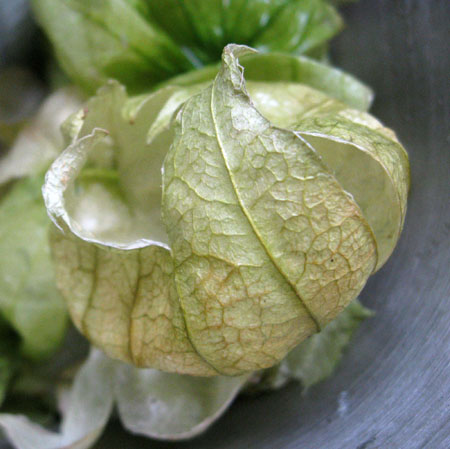
I find the husks on tomatillos charming. I can’t resist taking photos of them.

It takes a lot of chopping and dicing to make this salsa, but it’s worth it!
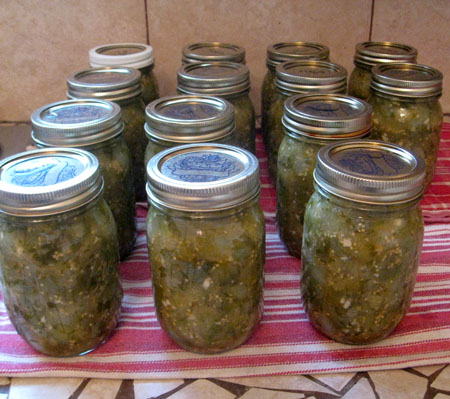
Ingredients:
5 1/2 cups husked, cored, and chopped tomatillos
1 cup chopped onion
1 cup chopped jalapenos
1/2 cup white vinegar
4 tbsp lime juice
4 cloves garlic, minced
2 tsp ground cumin
1/2 tsp salt
- Prepare canner, jars, and lids.
- In a large stainless steel saucepan, combine all of the ingredients. Bring to a boil over a medium high heat, stirring constantly. Reduce heat and boil gently, stirring frequently, for 10 minutes.
- Ladle hot salsa into jars, leaving 1/2″ head-space. Remove air bubbles and adjust head-space if necessary by adding more hot salsa. Wipe rim. Center lid on jar. Screw band down until resistance is met, then increase to fingertip tight.
- Place jars in canner, ensuring they are completely covered by at least 1″ of water. Bring to a boil and process both 8 ounce and pint jars for 15 minutes.
You should know that the amounts I’ve given are for one batch, which is ridiculously small. I made 5 batches all at once. If you’re like me and would like to make a lot at once multiply all of the ingredients by five. It’s nice to know you can do smaller batches, though, because if you have a lot of these ingredients in your garden you may only be able to make a little at a time as things ripen.
You can use other types of hot chili peppers, according to your tastes. I only have eyes for jalapenos because they don’t repeat on me as much as other peppers. I like serranos too but they tend to be too hot for me. If you used a cup of serranos per recipe I think you’d be breathing fire and then you might die (mostly just kidding). So if you like things hotter, try a blend. Just be sure that the total amount of peppers you use remains the same.
You can also use a little more garlic if you like.
This salsa is quite soupy. Mr. W wanted to know if it can be made thicker. I’m not sure about that yet. I have to do a little canning research before I know how much I can safely adjust the liquid content. (If I was just making it for fresh eating, instead of for canning, I would just cook it down til it was as thick as I liked). Until I find out, or some other experienced canner gives us the answer, don’t mess with it. It’s amazing just as it is.
Garlic Dill Pickles

Fresh from the canner, these pickle slices are still turning from bright green to dark green.

You can use small, medium, or large cucumbers, but the larger they are (of course) the fewer you can fit in one jar.

You can also do some sliced. I have found that they are a little softer in texture than the ones I can whole but I like these for sandwiches and it doesn’t bother me.
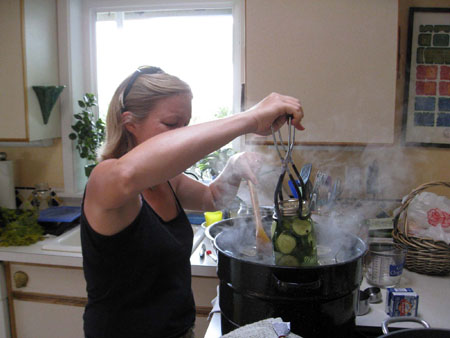
My friend Lisa E. (pictured above) and I learned to pickle dills together. The first recipe we tried called for pickling spices, so we cooked up a batch of the vinegar with spices and Lisa, smelling the odor coming from the pot, mentioned that she wasn’t enjoying the smell of the spices and was reluctant to use them, wasting a bunch of cucumbers. Although I hadn’t thought about it, I didn’t like the idea of my pickles tasting of allspice and Cinnamon either. We looked furiously for a dill pickle recipe that would have a clean garlicky dill flavor. We found only one that came close to our idea of how a pickle should be and it came from the Sonoma County Extension office. We tweaked it just a little bit until it was perfect. My sister, who is a dill pickle connoisseur called it one of the best pickles she’s ever had! So here’s the recipe for you to try!
Ingredients:
4lbs (2 quarts) freshly picked small to medium sized cucumbers
4 tbsp canning salt
4 cups vinegar
4 cups water
1 fresh head of dill weed per jar
1/2 tsp mustard seeds per jar
1 clove garlic per jar
6 peppercorns per jar
Method:
1. Wash cucumbers thoroughly.
2. For whole cucumbers, small sizes up to 4 inches are preferred. Larger cucumbers should be sliced, quartered, or halved lengthwise.
3. Combine salt, vinegar, and water in a pot. Heat to boiling.
4. Pack cucumbers into hot clean jars. For each quart jar add: 1 head of dill, 1 clove of garlic, 1/2 tsp mustard seeds, and six peppercorns. Fill with hot pickling liquid to 1/2 inch of the top for quart jars, and 1/4 inch for pints.
5. Process pint or quart jars of whole cucumbers in hot water bath for 10 minutes, jars of slices or halves for five minutes.
6. Let the pickles cure for 4-6 weeks before opening to taste.
Recipe notes: I have updated this recipe to start off with a larger batch of brine. Because of the irregularity of cucumber size and shape it is an inexact science to figure out how many jars of pickles you’ll get out of 4 lbs of cucumbers. Sometimes you can only fit three in a jar, sometimes you can fit six. So be prepared to whip up another batch of brine. It’s truly fast and easy to do. And remember that if you have leftover brine you can save it in the fridge for more pickling projects.
Cherry Liqueur Recipe
The color is gorgeous. I especially love using Morello cherries.

They are hard to find so you may have to plant your own tree!
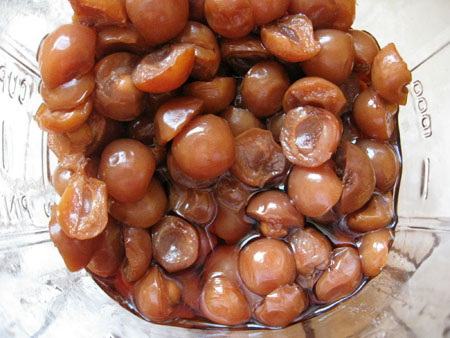
Cherry Liqueur Recipe
Ingredients:
1.5 pounds sour red cherries, cut in half with the pit left in one side
1.5 cups granulated sugar
2.5 cups 100 proof vodka
small piece of cinnamon
Method: You put a third of the cherries in a half gallon sized jar, then pour a third of the sugar in. Do the next third of the cherries and the next third of the sugar. Then do the last third of both. So it is layered in the jar. If you want to use the cinnamon add it now. Then pour the vodka in. I guess the layering is just for fun because then you stir it all up. Every recipe I’ve read always calls for layering the ingredients in the jar first. Stir it up, cap it, and then put it in a cool, dry, dark place.
For the first two weeks shake the jar up at least once every day. This makes sure that the sugar completely dissolves. After that let it age for 3 months.
Strain out the cherries and pour the liqueur into bottles.
Recipe Notes: I have made many attempts at cherry liqueur and all of them were unsatisfactory until the last batch I made which was perfect! I confidently recommend that you only make it using a pie (sour) cherry. It doesn’t matter what kind as long as it has red skin to contribute color. Definitely leave the pits in, they add a very subtle almond flavor to the drink which makes the flavor more complex.
I also highly recommend that you use 100 proof vodka (or everclear). If you are using 80 proof I would lower the sugar content or it will be more like cough syrup than a fruity enjoyable beverage. The next time I make this it will be without the cinnamon. Although I enjoyed the slight spiciness it added to the flavor, I want a clearer cherry flavor.
Vanilla Pears: A Home Canned Favorite

This recipe is a safe adaptation of the recipe for canning spiced pears from the Ball Blue Book Of Canning. When my friend Lisa E and I were making canned pears together she had some vanilla bean pods she needed to use up and she thought it would complement the flavor of the pears, so we used less of the traditional cinnamon and cloves and cooked the pears in a sugar syrup with cut up pieces of vanilla.
The addition of vanilla gives these pears a wonderful delicate taste that can be enjoyed alone, in galettes, or on yogurt (one of my favorite ways to eat them).
In this recipe it is safe to substitute different spices. If you don’t like cloves, use nutmeg instead. You can use one spice, two, or as many as you like for a custom flavor. I love pears with nutmeg but Lisa prefers hers without. Don’t be afraid to experiment.*
Ingredients:
2 to 3 pounds pears per quart
cinnamon sticks
whole vanilla beans
whole cloves

Instructions:
Hot Pack: Wash pears; drain. Cut into quarters or halves; core and peel. Treat to prevent darkening (highly recommended – I use “Fruit Fresh” which you can find in almost any store that has a canning supplies section). Make a light syrup (we used a 30% syrup last year and a 20% syrup this year. You don’t have to use a syrup at all, but I recommend it because it helps preserve the texture and the color.) Cut up a whole vanilla bean into approximately 3/8″ pieces and add them to your sugar syrup. Splitting the bean down the center will help release the vanilla seeds into the syrup. Keep syrup hot.
Cook pears one layer at a time in syrup for 5 to 6 minutes or until hot throughout. Put a small piece of cinnamon bark (about a 1/2″ to 5/8″ piece) and 3 to 6* cloves in each hot jar. Pack hot pears into hot jars leaving 1/2″ head space. Remove air bubbles. Adjust two piece caps. Process pints 20 minutes, quarts 25 minutes, in a boiling-water bath canner.
Recipe note: Remember that cinnamon and cloves will get stronger the longer they are in the jars so if you like a much spicier flavor, add more, but we used only three cloves per jar so that the vanilla (much more expensive) is the main flavoring. The vanilla accents rather than hides the pear flavor
How to Make Sugar Syrup For Canning
*If you are ever concerned about whether or not a substitution in a canning recipe is safe, always call your local Extension Service to find out. Generally substitutions are discouraged but with many recipes it is safe to alter spices as they don’t change the PH of the food and account for a very small percentage of the total volume of your ingredients.
How To Preserve Citrus

Preserving Citrus
By Riana Lagarde
When Life gives you Lemons
In the Orient’s colorful markets you will see bright and sunny foods reflective of the desert landscape: green and black olives all-shades from sand to khaki to midnight, heady spices in conical stacks of saffron-red, turmeric-yellow, and burnt-sienna coriander. I am a lemon fanatic–I can eat them raw with just a little salt like an apple–thus I am always drawn to the gorgeous Suns: salt-preserved lemons bobbing in clear glass jars in those sultry markets. Dreams of chicken, artichoke and preserved lemon tagines (see the end of the article for the recipe) dance in my head to the same dizzying beat as the whirling dervishes.
Besides lemon jellies and marmalades, freezing lemons’ peels and their juices in ice cube trays, you can preserve the entire lemon. The ancient Arabic method of preserving lemons is easy and only requires three simple ingredients: lemons, lots of salt and plenty of time.
Once they are preserved the idea is to scoop out the soft flesh which you can use for something else, then finely chop the soft peel before adding to your savory dish – they’re best added towards the end of cooking. This procedure comes from the ever-reliable Claudia Roden.
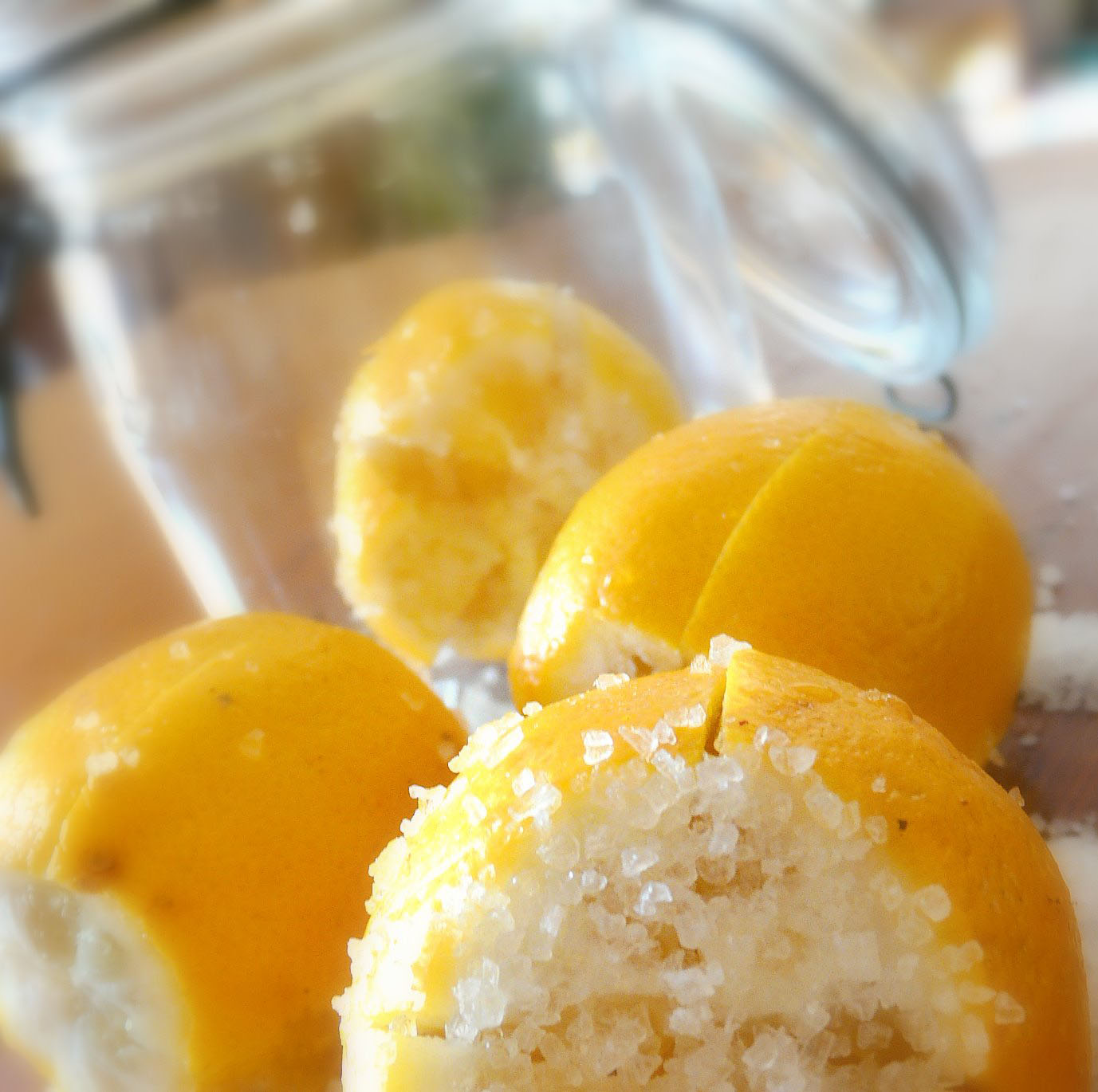
Salt Preserved Lemons
8 unwaxed lemons, preferably organic, if your lemons are waxed, it will not work
Around 4 Tablespoons of coarse sea salt
Cut each lemon into quarters, without going all the way through to the end. That leaves you with four petal star shape which you then pack with course sea salt. Squish the lemons into a sterilized preserving jar pressing down to release the lemon juice; seal and leave the jar on the counter for four days, so the salt draws out more the juice (it is very decorative as well). The skins will soften and the jar will be full of juice. You want high acidity, so top off the jar with fresh lemon juice; seal again.
Leave in cool (refrigerator or root cellar) place for about a month before beginning to use.
If the lemons are not covered by the juice all the way, they may develop a white mold which Roden says is harmless and should be washed off.
You can keep the juice after you’ve used the lemons, and start a new batch of lemons in the same jar. You might see a kind of lacy white substance in the jar as the lemons mature.
Use a wooden spoon to remove lemons from the jar.
Once you have your batch of preserved lemons, you start to wonder: What would I use preserved lemons for? You want to put them in everything! Anywhere that a little bit of mysterious lemoniness would be nice, preserved lemons are the ticket.
Consider: tossed in a green salad, potato salad, or pasta salad; over asparagus; over broccoli; over spinach; in melted butter for dipping artichokes; in couscous; in a stew of whatever, along with olives; in Spanish rice; with baked or mashed winter squash; as a garnish for carrot soup; as part of a Mediterranean-style gratin; with lentil stew; with penne and fresh tomato sauce; as part of a Greek egg-and-lemon soup; in a olive-oil pasta sauce; minced to the point of puree and mixed with butter and herbs to make a spread for cucumber sandwiches.
Two favorite preserved lemon uses: 1) Cut up and toss with root vegetables and whole unpeeled garlic cloves and olive oil and fresh ground black pepper and (opt) rosemary . Roast on a cookie sheet until all these things are soft as the lemons and crusty brown edged- with a good bread to mop it all up.
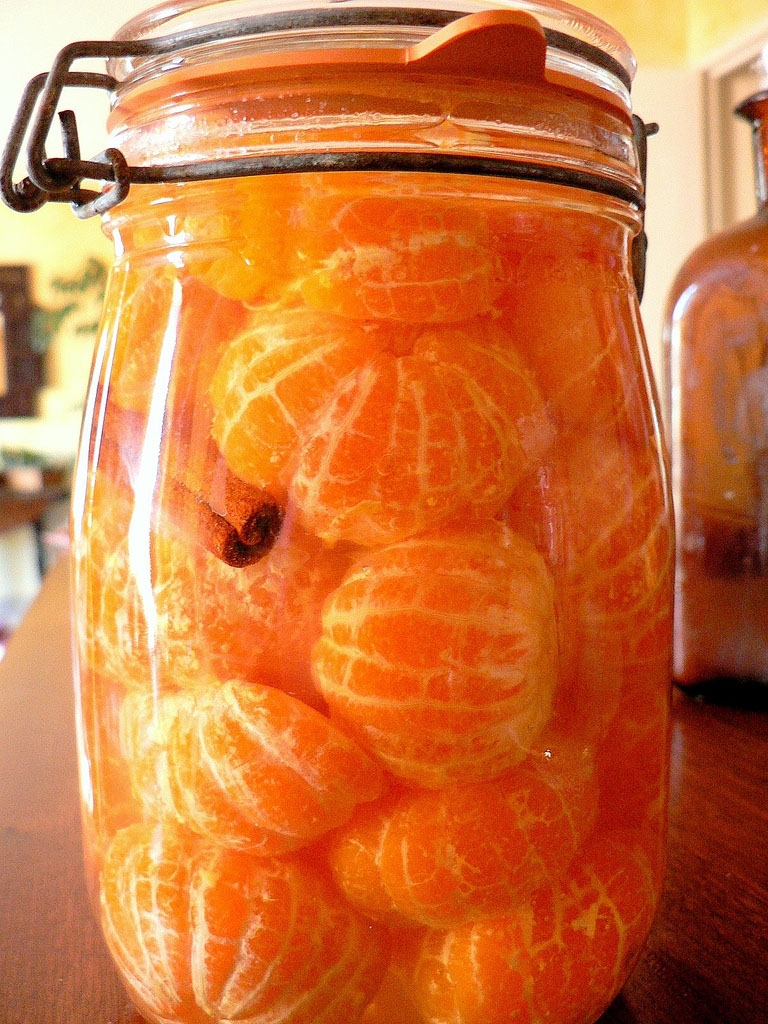
Mandarins
Types:
Satsumas: Very sweet, seedless, medium sized, free skinned
Clementines: Small, very orange, few seeds, very sweet
Canning: To extend the season of mandarins, they can be preserved as well. Peel, separate the segments, pack in jars with a sugar syrup (I add a touch of rose water) and be sure to process in a simmering hot water bath (30 minutes for pints, 35 minutes for quarts).
For desserts, use your syrup preserved mandarines over pound cake or ice cream with sprinkles of orange liqueur. Mandarin orange juice is good plain or blended with ice cream for a cool refresher.
Mandarins can also be used in marmalades, sauces, ciders or glazes or use the delicious segments topped on a spinach salad.
Rock-salted Tangerines
If you add extra lemon juice to up the acid for preserving, you can bottle your tangerines in the same fashion as salt preserved lemons. Then you can use them for savory dishes (omitting the salt in your recipes) like duck l’orange, chinese orange beef, minced meat pies, and spicy lamb tagines. I also chop them finely and mix with a black olive marinade for chicken or fish, and bbq sauces.
Recipes:
Lemon Chicken Tajine
from Claudia Roden’s Arabesque
Ingredients
3 tbsp extra virgin olive oil
2 onions, finely chopped
2-3 cloves garlic, crushed
½ tsp crushed saffron threads or saffron powder
¼-½ tsp ground ginger
1 chicken, jointed
salt and freshly ground black pepper
½ lemon, juice only
2 tbsp chopped coriander
2 tbsp chopped parsley
2 small preserved lemons, peel only (don’t substitute fresh lemons for preserved; the taste and texture are completely different, and preserved lemons are super-easy to make. All you need is patience, a clean glass jar, and lots of salt.)
12-16 green or violet olives, either stoned or left whole
9 artichoke bottoms
1. In a wide casserole or heavy-bottomed pan that will fit the chicken pieces in one layer, heat the oil and add the onions. Sauté, stirring over a low heat, until softened, then stir in the garlic, saffron and ginger.
2. Add the chicken pieces, season with salt and freshly ground black pepper, and pour in about 300ml/10fl oz of water. Simmer, covered, turning the pieces over a few times and adding a little more water if it becomes too dry.
3. Lift out the breasts after 20 minutes and set aside. Continue to cook the remaining pieces for another 25 minutes, then return the breasts to the pan.
4. Stir in the lemon juice, coriander, parsley, preserved lemon peel and olives, then lift the chicken pieces and put the artichoke bottoms in the sauce beneath them. Add a little water if necessary and cook for about 10 minutes until the artichokes are tender. Serve with the olives and lemon peel on top of the meat.
Tangerine Marmalade
4 tangerines or oranges
1 lemon
1 quart of juice and pulp
2 quarts water
sugar
Slice oranges and lemons is thinly as possible. Add the water and allow to stand covered in the refrigerator for 24 hours.
Cook over low heat until the rinds become tender. Cool and cut rinds into small pieces. Place in refrigerator and allow to stand another 24 hours.
Measure out fruit. To each quart of fruit add 1 quart of sugar. Bring to a boil, then reduce heat and simmer until marmalade thickens and the oranges are clear.
Ladle into hot sterilized jars and process in a boiling water bath for 10 minutes.
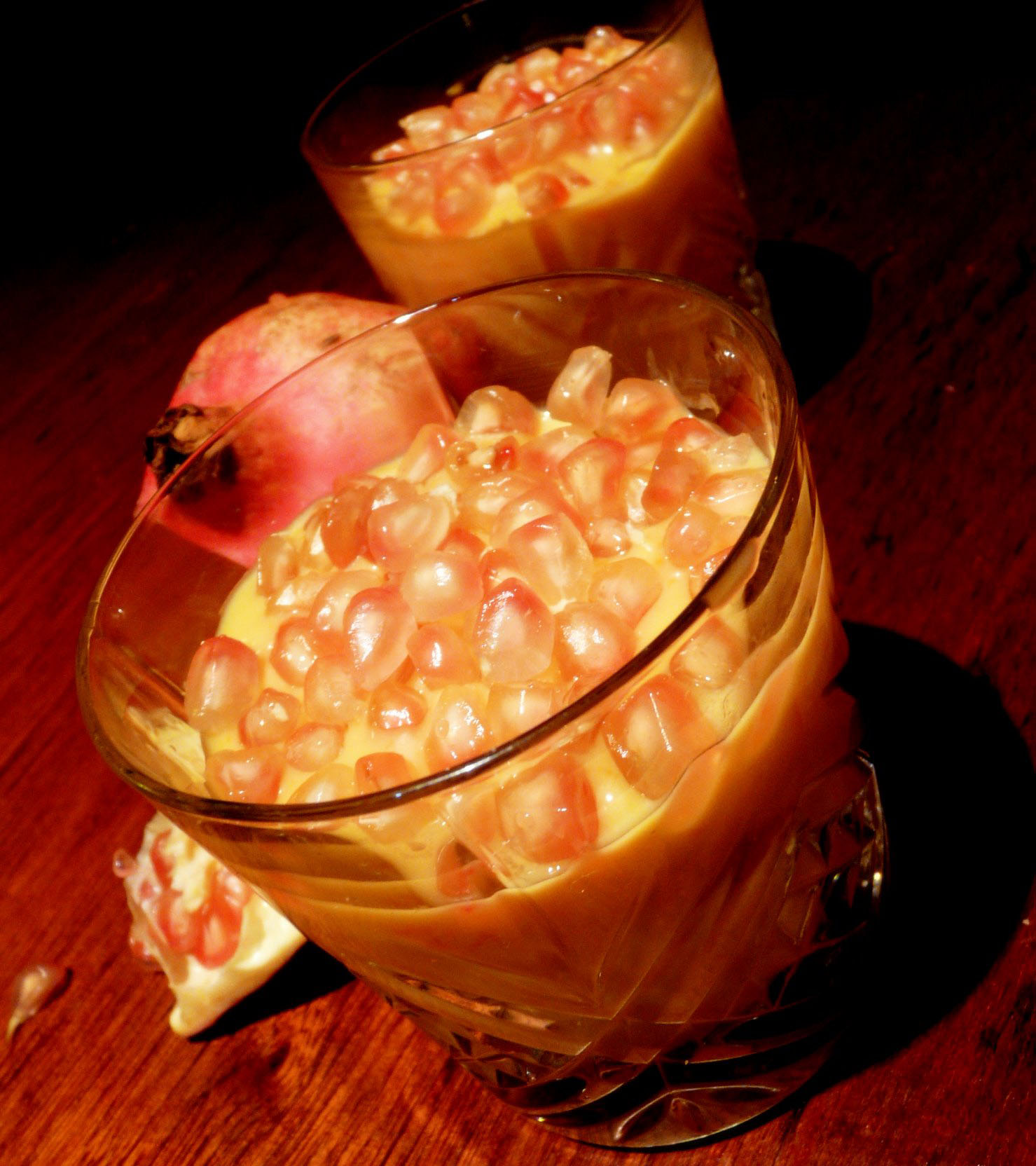
Preserved Manderin Pudding
1 cup orange or mandarin juice, blood orange juice is beautiful for this
1 cup of syrup from the preserved manderins
10 preserved manderins divided into sections and pips removed, if any
1 ½ tablespoons corn starch or arrow root
seeds of ½ a pomegranate
1 cup heavy whipping cream,
Bring the orange or mandarin juice to the boil with the syrup and manderine sections, remove any pips.
Dissolve the cornflour in 250ml/9fl oz of water and pour it into the simmering juice, stirring vigorously. Continue to stir – in one direction only – until the mixture thickens, then cook over a low heat for about 15 minutes. Stir in cream and cook for five more minutes.
Let the orange or mandarin mixture cool and pour into a glass serving bowl, cover with clingfilm and chill in the fridge for a few hours.
Sprinkle the pomegranate seeds over the pudding and serve with more whipped cream if you wish.
Editor’s Note: Riana Lagarde is an intrepid urban homesteader living a slow life in Southern France. Although she’s been professionally writing about food and travel for magazines for several years, she has recently given up magazine writing to concentrate her efforts on raising chickens, gardening, and writing for her own publications.
Pantry Ideas: Using It Up
The idea behind preserving food is to get us through the months of the year when good quality fresh produce is hard to come by. You stock up on all the things you are going to want to eat later on that are in season now. If you’re like me, that means that you froze a bunch of strawberries, sour cherries, blueberries, and roasted vegetables. You canned pickles, dill beans, tomatoes, jams, and juices. You dried herbs and like my friends Lisa B and Nicole, you may have even dried some vegetables.
If you have been holding back on using the things you preserved for fear of running out, now is the time to use it all up; especially any items that are over a year old already. The quality will not improve most food with time* so you want to make room to store fresher produce this year. What to do with it all? Do you need some inspiration? Here are some ideas on how to use what you’ve preserved:
Pickles (dill or sweet):
- Potato salad- I always add chopped dill pickle to mine.
- Grilled cheese sandwiches or hamburgers- a classic.
- Egg salad- I love the salty crunch.
- Put out with sharp cheddar cheese as an appetizer.
Tomatoes (diced, stewed, sauce) (You still have some?!):
- Give yours to me- I’m almost out.
- Spaghetti- it’s obvious but a no fail.
- Add to winter vegetable soups- adds a bright note.
- Make a tomato bread soup- such a luxurious light meal.
Grilled frozen eggplant:
- Add to pasta with sun-dried tomatoes, olive oil, and garlic.
- Add to a tomato sauce (diced) with a little balsamic and some onion.
- Heat up and eat in a sandwich- will remind you of summer.
- Add to lasagna- I just used ratatouille for a lasagna sauce!
Frozen or pickled hot peppers:
- Add to a black bean chili- perfect for chilly early spring.
- Use in a frittata with sharp cheddar cheese and fresh cilantro.
- Use them in tomales- I am hankering for this right now!
- Spanish rice- I just learned how to make this.
Frozen Fruit:
- Yogurt smoothies- I’m craving these right now.
- Added to muffins- easy to do, don’t defrost first.
- Cooked with a little sugar to make a compote- for pancakes, or deserts.
Are there things in your freezer or pantry that you want to use up but are having trouble getting inspired to use? Tell me what you have and I’ll help you come up with new ways to use them (be sure to tell me what you’ve already been doing with them so I don’t repeat those ideas). Let’s get our freezers and pantries cleaned out and ready for the new season! We make the food so we can eat the food.
Are you doing something you love with your home preserved goods right now? Share it with us all in the comments.
*Fruit cheeses and wines are the exceptions here.