Category Archives: Gardening

all things kitchen gardening

Support the Safe Seed Pledge: no to GMOs!

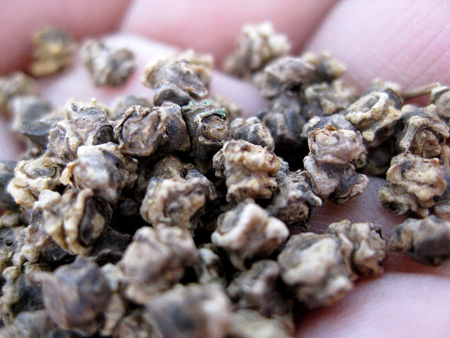
beet seeds 2.jpg

It’s no secret that I am adamantly against all use of GMOs.  I have done a lot of reading and considering on this subject and have come to the conclusion that having food with systemic pesticides cannot be good for either people or the planet.  I am already against pesticides applied externally on crops.  The wind takes it aloft spreading it across everything, not just the targeted crops, so that we all breath it whether we choose to or not.  It pollutes our water through runoff.  Traces of it stay in the food people eat, even after washing. 

So why would I think it’s a good idea to create a plant whose dna includes a pesticide?  It can’t be washed off at all.  A pesticide in the genes can cross with clean plants giving it some of it’s altered genes without you even knowing it and this is what’s already happening: GMO crops contaminate other crops through their seed  being carried on the wind and by birds.  Even when we purposely choose to eat only non-GMO foods we still may be eating them because farmers planting GMO crops can’t prevent contamination to other farms.

I am becoming increasingly angry and alarmed at the disregard my country shows towards my health and my ability to make what I consider to be good choices for my body.  There isn’t a lot you or I can do to stop the GMO companies from spreading their seeds to industrial farmers and it feels hopeless sometimes but I would like to suggest that our income is still the best place we can assert our power.  Our income and our voice through voting and protesting.

Here are a few things we can all do to help fight against GMOs infiltrating our lives:

  • Do you purchase any packaged food?  Write letters, e-mails, or make phone calls to the producers of the food you buy to ask them if they use GMO produce in their products.  If they say they do, stop buying that product and find one that doesn’t use GMOs.  I have actually done this once and plan to do this more.  If you make your preference and your concerns known to companies it puts pressure on them to respond.  They need your money.

  • Don’t vote for any candidates who are known to support (in any way at all) the companies that produce and promote GMOs.  Read up on them and you can find out what corporations they are affiliated with.

  • Campaign for labeling.  Write letters to the government and also to the stores where you shop.  Labeling of all foods with GMO ingredients should be mandatory so that those of us who don’t want to ingest or support them can choose not to.  Here is a link with suggestions on how to use guerrilla tactics to get your message across:  Do it Yourself GMO and Factory Farmed Foods

  • Plant open pollinated seeds from seed companies who have taken the safe seed pledge.  The corporations who are selling GMOs aren’t targeting the civilian population any more (having failed to gain support) and are mostly targeting industrial farmers, but even so, supporting seed companies that have taken the safe seed pledge is important – these are the people preserving clean seeds and our future depends on our ability to save our own seeds (you can’t save your own seeds if you plant GMOs, it’s not only illegal, it is often not successful).

I buy most of my seeds from Territorial Seed Company because they have seeds that have been acclimated to my climate, they’ve taken the safe seed pledge, and they offer a good variety of open pollinated seeds which is about 90% of what I plant. 

If you would like to find out what other seed companies have taken the safe seed pledge you can look up “safe seed pledge” online or you can go to this link I found:

Safe Seed Resources

I also found this interesting article by Greenpeace on GMO seeds:

Facts and Figures About GMOs

(that will give you the link to download the article)

Enhanced by Zemanta

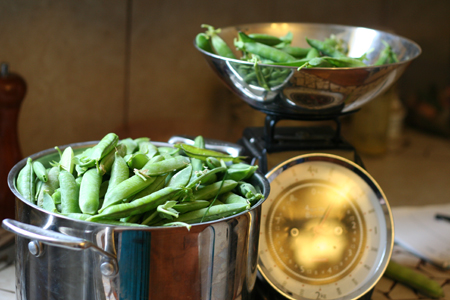
Shelling Pea Harvest: 2010

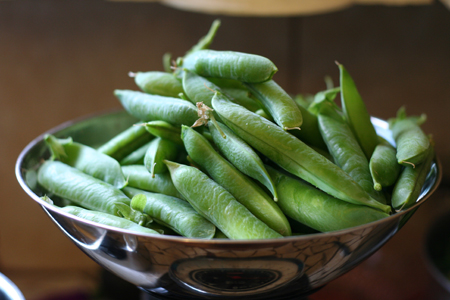
weighing peas 2.jpg

Nothing about my gardening tactics is ideal.  I frequently plant later than I’m supposed to (often in an effort not to plant too early which simply results in me losing track of when I’m actually supposed to plant), I have no drip system in (so everything is hand watered, or as is more often the case, I don’t water at all), and I never seem to make time for weed control which, since I don’t use herbicides to control them, means they grow taller than me.

The reason I’m bringing this up is that whenever I write down what yields I got for something, you can always remember that if I was a better gardener* those yields could be higher.  This should give hope to the less savvy people trying to grow their own food.

I was so sloppy this year that I’m not even certain which varieties of peas I planted.  I will need to dig through nefarious corners of my garden boxes and seed containers to see if I saved them.  I believe I used Alderman and Cascade, but I’ll have to double check.  Assuming I’ll remember to double check.

Total yield: 9 lbs 9 oz shelling peas

raised bed breakdown:
4×8 bed: 6 lbs 12 oz
1×3 bed: 2 lbs 13 oz

I never watered the peas.  They grew, bloomed, and fruited all during our prolific rainy season.  So that’s some good value.  I used two packets of peas which cost me a little more than $5. 

Doing some tricky math (because I’ve forgotten how to do it the easy way) I calculate that my homegrown peas cost me about .53 cents per pound.

I don’t know about where you live, but where I live you don’t find fresh shelling peas for that price. 

In case anyone is curious, I didn’t add any purchased fertilizer either.  We add straw with slightly aged chicken manure from our own hens.  BONUS.  So no money was spent for fertilization.  No effort besides planting the seeds was made by me.  No watering.  I got 9 lbs 9 oz fresh shelling peas for all that non-effort.  Who can complain about those economics?

What would have improved my yield:  weeding, planting earlier

*I’m actually an excellent gardener when I’m not working full time.  Or when I have the money to install things like drip irrigation.  In a previous life (when I lived in California) I had a much more productive garden and the weeds, though always plentiful, never reached full potential height.  But that was back when I was a housewife and stay at home mother.  That was when I realized that my passion, aside from writing, was urban homesteading.  Ah well, good memories!

Enhanced by Zemanta

Kitchen Garden Notes: July 10, 2010

shelled peas and onions 2.jpgIt’s HOT.  It’s too hot to go out and water anything but it’s hot enough that everything needs watering.  Except for the peas and favas which I’m almost done harvesting.  I grew two kinds of peas and as soon as I can find the packages and finish weighing them up I’ll write a post about the total yields I got from them. 

I only plant peas for shelling.  Without intending to, one of the varieties I planted this year is a “pod pea” which is the kind you can eat pod and all- even after the peas have started growing large.  I don’t like to eat them that way.  I do like snow peas when they’re young and tender but I hardly ever grow them because the shelled peas are so darn good and so hard to come by in farmer’s markets or grocery stores that I devote all my pea space to growing my own.

Is it worth it?  Oh yes!!

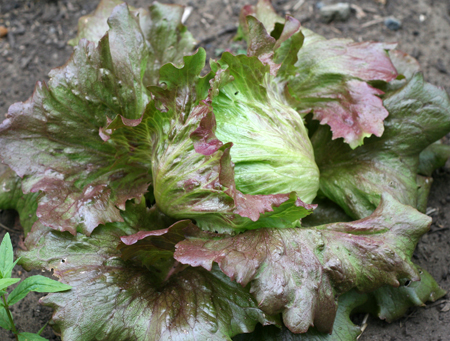
lettuce head 2.jpgThis is the first time I’ve ever grown iceburg lettuce.  This is “Red Iceburg” which was really crispy and delicious.  I only got two heads of it because I wasn’t careful in my sowing of the seeds and had some cat interference as well.  I will definitely be growing more crisphead lettuces!

pile of favas 2.jpgThe favas didn’t get very large this year.  I attribute this to how late I planted them.  As always, they are very tasty and were effortless to grow.  No pests (now there are black aphids on them but there were none all season up until harvest time). 

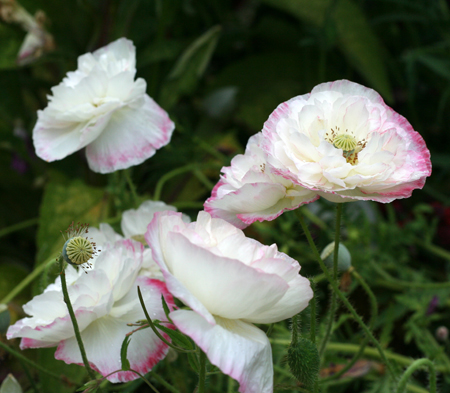
pale poppies 2.jpgThe poppies continue to amaze me.  I find them mesmerizing and I look at them all day from my window while I work.  I love the scarlet ones, of course, but these pale ones may be my favorites. 

pea harvest 2.jpg

Right now my yard is waist high in grass and weeds.  We have no mower (ours broke and no one here in town works on electric mowers)* and I have not been making time for weeding between working and writing my novel.  This coming week I hope to work harder to tame the forest out there.  I have wild blackberries threatening to swallow half my yard too. 

This I am encouraging in part because I tasted them last year and they were really good!  I love blackberries and I had actually thought about buying a couple of cultivars to create a hedge of them in the corner of my garden.  Sometimes nature throws at you exactly what you crave.  They are probably the “Himalaya” blackberry which is considered a noxious weed here in Oregon.

I can’t consider anything a noxious weed that generously feeds so many animals, insects, and me!  This heat, though I loathe it, is exactly what the blackberry bushes need in order to ripen the buckets of green fruit they’ve got hanging from them. 

*This is a reasonable excuse, but of course we hate mowing and rarely do it anyway.

Strawberry Yield: 2010

scale strawb 2.jpgThis whole yield is from second year plants that I planted at the base of my three peach trees (which are in 3′ x 3′ raised beds).  I wish I had recorded exactly how many plants I put in each raised bed but since I didn’t I’ll have to estimate that there were about 7 plants per bed. 

macro strawb 2.jpg

The first year we got only a handful of berries.  I didn’t pinch off the flowers as all garden books suggest (to strengthen the roots and plants so that the second year will be all about fruit production.

Total yield from 21 plants:  13.5 lbs

That means that each plant produced .64 lbs of fruit.

I have done some research on how much yield I should be expecting (to see if my plants are performing well or not) and there is wide variation in what yields one should expect.  So that’s inconclusive. 

What I can conclude is that underplanting the peaches with the strawberries worked really well!

Because most of the fruit is ripe before we get our hot weather here I didn’t water these once this season. 

These are june-bearing plants but I don’t know which specific variety because a friend gave them to me last year. 

Enhanced by Zemanta

Kitchen Garden Notes: June 11, 2010

red rome apple 2.jpgThere are so many good things happening in my garden right now.  My Red Rome apple has set a ton of fruit even though it’s still sitting in a dirt pile in the driveway.  We dug it up from the other house and haven’t decided where to put it yet.

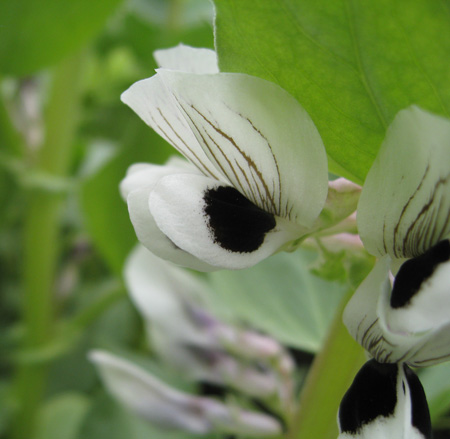
fava macro 2.jpgI love fava flowers with their bold black marks and stripes.  I planted them late this year so I’m not sure how they’ll do but it seems they’re doing fine so far.  It just might be later than usual when I get to harvest them. 

blueberry cluster 2.jpgAll of our blueberries were transplanted from our last house and are doing pretty well.  This particular one is in the same dirt pile as the Red Rome.  In spite of not having a deep place to send its roots down in, it looks pretty happy. 

peas blooming 2.jpgThe peas are very tall and covered in blossoms though I have yet to find any pods.  Peas really love our cool climate here. 

strawberry cluster 2.jpg

The strawberries from last year are very full and making tons of berries.  Unfortunately they are also being choked by bindweed which is rampant in our garden.

Seeing all the good fruit and flowers growing in my garden right now is a little bittersweet because there’s a strong chance we’ll have to move.  Not to a new house but to a rental.  We’re trying to work with our bank so that we can keep our house but the truth is, it doesn’t look good.  So I walk around and wonder what I’ll get to taste before I have to pack up and find somewhere new to live. 

We’ve started four gardens at four houses since becoming homeowners 10 years ago and I’ve gotten better at it with each one.  Every time I plant fruit trees and look forward to tasting the first tiny harvest and each time I end up moving before I get to enjoy them. 

We like to think of ourselves as modern-day Johnny Appleseeds, planting fruit trees everywhere we live so that others can enjoy them after we’re gone.  Establishing fruiting trees in a world that talks about starvation and wonders how we can feed all the people in the world while planting non-fruiting apple trees and ornamnentals feels useful and positive. 

If we don’t get to keep this house we will probably never be able to own a house again and my gardening days of collecting antique roses, establishing fruit trees, and growing my own vegetables will be likely be over.  It doesn’t mean I can’t continue to do a lot of the things that define urban homesteading. 

I am thinking about places where I can transplant some of my treasures so that I can visit them. 

But who knows, maybe some amazing bit of luck will allow me to stay put.

Kitchen Garden Notes: May 18, 2010

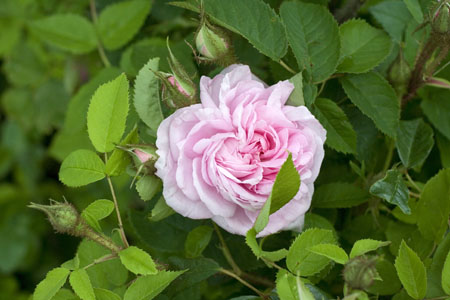
another pink moss 2.jpgThe moss rose Gloire de Mousseux is in full bloom.  I didn’t prune any of the roses this winter so they’re a riot of tangles.  This one gets very tall.  I’m pleased it didn’t ball up in the spring rain.

arnica macro 2.jpgThe arnica has just started blooming and I have promised myself not to miss out on harvesting it this year.  I got lots of blooms last year and never managed to get them.  They trickle in for a while then bust out in full flower mode and then are suddenly done.  I’m determined to make an arnica salve from my own plants this year.

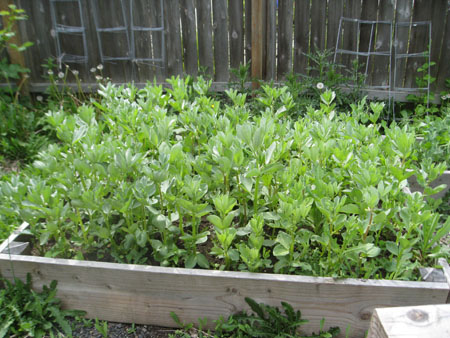
favas 2.jpgThe favas are beginning to set flowers.  I wish they’d had a chance to get taller first but I planted them late in the season.  Still, I can’t complain about getting such a great germination rate for this bed I planted.  Almost all of the seeds came up.

pea tangle 2.jpgThe peas are very busy vining up.  I have a perennial problem of not providing support before it’s too late.  This variety is semi-self supporting.  We’ll see what happens.  No blossoms yet.

comfrey 2.jpgThe comfrey plants my friends John and Jin brought me from their own garden were looking dreary for a while but they are definitely digging in and I have a feeling they’ll fill out their raised bed well given the chance.  I’ve been wanting to establish a comfrey bed for ages.  Comfrey is brilliant in a healing salve, chickens love to eat it, and it’s also a great additive to the compost bin. 

*Note: as someone has pointed out, this is NOT comfrey.  Comfrey has bell shaped flowers.  I had not yet bothered to verify it’s identity and simply took it for what my friends believed it to be.  If anyone can tell me what it is, I would love some help identifying it.  It isn’t borage but may very well be in the Boraginaceae family- those flowers look a lot like forget-me-nots  but the foliage on the plant is a lot more like borage or comfrey.  At the base the leaves are quite large and form a big clump.  Anyone know? 

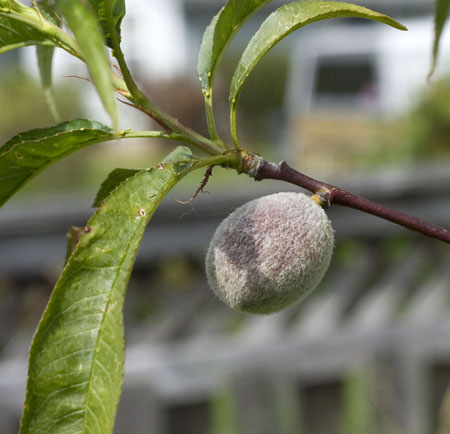
Frost peach 2.jpgOf the three peach trees this is by far the healthiest.  It’s “Frost” and seems to be much less inclined to succumb to peach leaf curl.  It has a few peaches that might not drop.  Fingers crossed!

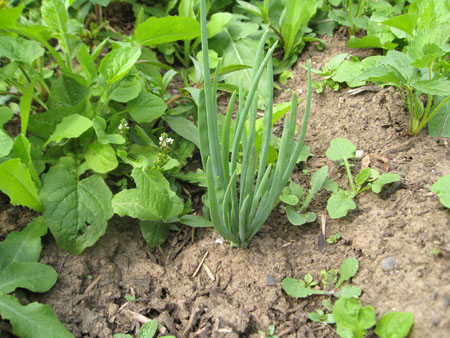
shallot 2.jpgI took the picture before I weeded.  I let this bed go nuts with weeds but when I was out there yesterday I started pulling them out and saw that most of my shallots had successfully come up.  Only a couple of rotters.  Now that I’ve cleared the weeds they should do even better.  They’re planted in a bed with strawberries.

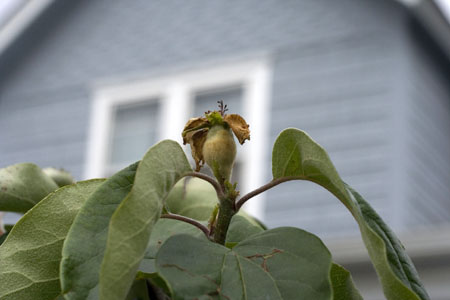
quincelet 2.jpgThe quince tree has really taken off this year and there are quite a few fruits swelling on it.  I’ll have to keep an eye out because the branches are still thin and might not support too much fruit.  Often a young tree will drop most of its fruit so I’ll just have to keep my eye on it.

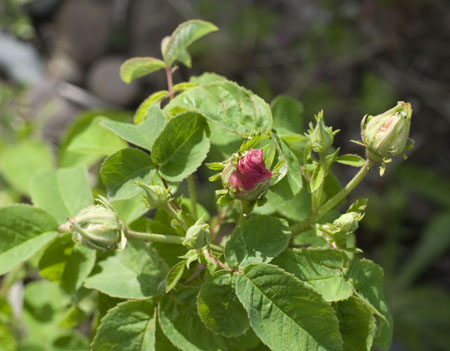
Apothecary Rose 2.jpgThis is my Apothecary’s Rose that my good friend Nicole gave me from her own garden.  She gave me several own root pots of them and most of them have survived.  This is one of the earliest cultivated roses and was used (as the name suggests) for medicinal purposes.  It’s a once bloomer that is supposed to set hips really well.  I’m pleased to see so many blossoms in this first year in the ground of my garden.

potatoes and thyme 2.jpg

This is my potato bed with most of my thyme plants.  I missed the opportunity to get an early crop of thyme for drying.  I don’t personally like drying and using stems that have flowered.  However, if your thyme is like mine and you’d like to get a good harvest in a month or so, I suggested giving them a trim now.  I plan to do that for mine in the next couple of days.  I used thyme more than any other garden herb.

The potatoes need mulching but I haven’t got a way to get a big bale of hay to our house right now.  So they’ll just have to wait.

I also managed to get planted seven artichoke plants: 5 Violetta and 2 Green Globe.  I put them in a raised bed that’s 8′ x 4′ which if the artichokes grow well will barely be able to contain them.  I didn’t have another spot prepared for them and needed to get them dug in so it’ll have to do.  I can always transplant them later if need be.

I bought, but haven’t planted, 6 tomatoes: Caspian Pink, Green Zebra, Black From Tula, Pruden’s Purple, Sun Gold, and Striped German. 

Reblog this post [with Zemanta]

April 29 2010: In The Kitchen Garden

male kiwi 2.jpg

This is the male fuzzy kiwi I got this winter to pollinate the two female fuzzy kiwis that I got two years ago and planted in half wine barrels.  This wasn’t meant to be their permanent resting spot and this year I will be putting all three in the ground to climb over a metal arbor around one of my garden gates.  Hardy kiwis do more reliably well here in the Pacific Northwest but I couldn’t resist the attempt to grow the bigger more well known variety.  I had bought a male to go with the females and it died.  So I know there is risk for them.  I love the fuzzy growth on their stems- and in this male the coloring is really red!  Some people have cute new lambs and kids to get excited over, I have male kiwis.

red currant 2.jpgI also bought three red currants a couple of years ago that ended up living in pots until last month when I finally put the surviving two in the ground in my monastery garden.  That may not be their permanent spot but they needed a more substantial bit of soil to grow strong roots.  They are still very young plants but I saw that one of them flowered and now there are these very tiny berries hanging delicately the thin branch and my hope is that they will ripen so I can finally taste them.  I will need to get one more, of a different variety, to improve pollination, but it’s exciting to see progress in the garden even when it’s small.

red rome apple blossom 2.jpgLast summer we managed to dig up a few of our good plants from our old house.  This was not my favorite apple tree but it was the one in the best condition.  It’s a Red Rome apple.  It already produces quite a few apples on its small form.  We’ll be getting another tree to ensure pollination.  There are apple trees fairly nearby but when one is planning a food producing garden it’s important to make sure that you have all the pollinators available on your own property because you never know when neighbors will cut down their own trees. 

white lilac 2.jpg
A lilac has a place in the kitchen garden just as all flowers do that attract beneficial insects.  I wouldn’t have chosen to plant a white one myself, but this one was already here and now I’ve come to enjoy its delicate coloring.

I’ve been clearing out my raised beds full of quack grass.  This is no easy feat as I have let them really settle in.  The first bed I worked on broke my shovel.  Literally.  My great lesson this year is to never let the quack grass completely take over any of my raised beds.  It’s almost time to plant out the summer vegetables like summer squash, tomatoes, corn (I don’t grow any but many do), cucumbers, and all the other vegetables that need the soil to be warm before transplanting. 

The lettuce I planted is coming up but not nearly as much as I planted, so that’s disappointing.  My peas and favas are up and climbing and looking really robust!  I look forward to growing and eating peas and favas every year.  I’m already planning the dishes I will make with them such as pasta with favas and peas and my constant favorite: grilled polenta and fava rounds which I usually serve with a marinara sauce and other grilled vegetables.

I’d love to know what’s going on in your gardens too!

Elderberry: Plant Profile

Native Elderberry 2

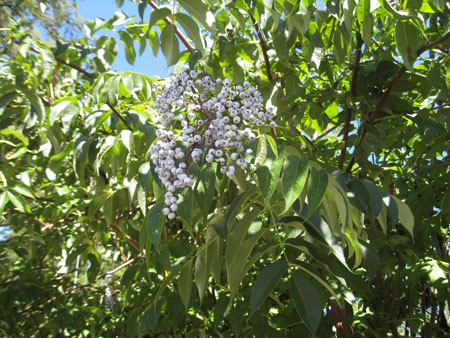
An elderberry tree is not difficult to identify, especially when they are in full fruit.  The umbels of small berries are not easily confused with any other kind.

 elderberry tree 2

Elderberry bushes can be pruned to be kept smaller in a garden but given free rein they can grow up to 30′ tall.

 elderberries macro 2
The

Sambucus Caerulea is distinguished for its light blue appearance that the white bloom on the berries gives them.
 tiny berries 2

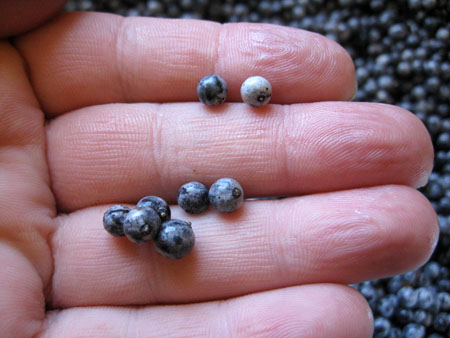
Different cultivars of elderberry may produce different sized berries, but even the larger ones are pretty small.

 stripped 2

You can see the structure of the umbel better when stripped of berries.  Its branching is intricate and rather pretty.

Most cultivars of elderberry are edible and used in both food and medicine.  Although the elderberry has somewhat fallen out of popularity outside the grandmother crowd, it has been highly valued by people for hundreds (possibly even a couple thousand) of years.  The berries have been used to make jellies, syrups, liqueurs, and pies while the delicate cream-colored flowers have been used to make teas, wine, and “champagne”.  The wood of the elderberry was used by craftsmen and in pipe making and the flowers have been used in cosmetics since the Roman times at least and are still used in cosmetics to this day.

Medicinal uses: the number one medicinal use for elderberry is as a cold and influenza remedy.  It is used in various forms to alleviate feverish conditions, and as an immune system stimulant.  It is prescribed for allergies, congestion, ear and throat infections, burns, inflamed skin and mucous membranes, and for arthritis and rheumatism.

Nutritional value: elderberries are high in vitamin C, vitamin A, vitamins B6, and iron.  They are a powerful antioxidant and are high in fiber.

Elderberry is native to Europe and North America.  The European elderberry (Sambucus Nigra) has dark bluish purple berries while there are two  North American elderberries, Sambucus Canadensis is native to the area east of the Rockies, and Sambucus Caerulea (a sub species of Sambucus Nigra) is native to the area West of the Rockies and extending all the way down to Mexico.

All the elderberries I have mentioned above are edible though it is important to note that it is best not to eat the flowers or berries raw unless you are very sure of the plant’s specific variety because some varieties have poisonous parts without being cooked*.  Unless you know exactly which species of elderberry you have you should always cook the berries and flowers before eating them.  If you are growing your own you can pick the specific variety you would like to grow; if you are foraging for elderberry you may find any of the types mentioned above growing in the wild.  Any elderberry with blue or purple berries is safe to consume when cooked, what you need to avoid is any elderberry with red berries.

Sambucus Racemosa (Red Elder) and Sambucus Canadensus “Aurea” are two types of elderberry with red berries that are poisonous.  While some red berry varieties may be safe to use under certain circumstances, it is best to avoid them unless you are an herbal expert.

Red berries = poison.

Black, blue, or purple berries = edible and safe when cooked.

That ‘s the most important thing you need to know.

Why would you want to grow this yourself?  Elderberry is the most popular cold and flu remedy used in Europe even to this day and the scientific evidence supporting the medicinal claims of this plant are growing all the time.  In the National Geographic Desk Reference to Nature’s Medicine they cite that many modern studies have been done to test the folksy claims of the power of the elderberry to heal and that the tests have shown that elderberry has consistently reduced the severity of flu and cold symptoms as well as reducing the length of illness.  This plant continues to be of interest to scientists as well of herbalists.

You can still forage elderberry but with public wild lands continually shrinking, most people’s access to wild elderberry is decreasing all the time.  This is a powerful enough herbal with enough uses to earn it a place in your garden.

Cultivation facts:

  • Elderberry is a large deciduous bush growing up to 30′.
  • It grows quickly and suckers freely.
  • All elderberries prefer a sunny location.
  • All elderberries require cross pollination with other varieties.  Either plant two different varieties in their own spots in your garden or if you have limited space, plant two varieties in one hole.
  • European elders do particularly well in alkaline soils though all elders are adaptable to most soil types.  Most elders enjoy a wet soil which is why it is common to find elders growing along the banks of rivers, however, once established an elder has few watering requirements.
  • propagation can be accomplished with seeds or cuttings.  The seeds need stratification.  Cuttings should be taken from semihardwood in the summer from new growth.
  • Because elderberries sucker freely they can take over your yard unless you control them.  However, the bush is not long-lived.
  • Elderberry is rarely bothered by pests as its bark has a natural insecticide in it.

*One of my herbal books says that all parts of the elderberry Sambucus Canadensis are poisonous (at least mildly) unless cooked.  Although I foraged and correctly identified the elderberries I’m using for elderberry syrup, and theoretically I should be able to eat these raw, they don’t taste very good raw anyway.  I tried one.  The flavor is greatly enhanced by being cooked.  Furthermore, throughout my elderberry reading I have read that all the bark and twigs of all the elderberry varieties are at the very least mildly poisonous which is why it is suggested in a number of sources to take care to remove all of the stems of the berries before using in recipes.  I would certainly follow this advice.


**The only problem you will run into with the two in one hole planting is that eventually as you prune old growth away or it dies off you may end up with one of the two varieties completely dying out.  If this happens you can always take a cutting of a cross pollinator and replant it with the more mature plant: dig up any existing suckers and plant your cutting there, near the base of the mature planting.
Make your own elderberry syrup:
Elderberry Syrup: DIY Apothecary
Information for this article comes from:
“The Complete Herb Book” by Jekka McVicar
“Desk Reference to Nature’s Medicine” by National Geographic
“The Essential Natural Health Bible” by Nerys Purchon
Nutrition Data- an online resource for nutritional data (nutritional information from the USDA)

Be sure to also check out our post on making elderberry syrup:
Elderberry Syrup: DIY Apothecary

Evaluating This Year’s Vegetable Cultivars

chard 2

I spend a lot of time thinking about what I want to plant in my garden each year.  I make my decisions based on an ever-evolving criteria which often include these points:

Is it cheaper to grow it than to buy it?

Will it do well in my soil?

If I grow it, will I actually eat it?

If it does so well I can’t keep up with it- can I preserve it?

Is it worth the water it will take to keep it alive?

But there are other considerations as well.  I like to plant a big variety of things but there’s a part of me that is always working towards finding all the “perfect” cultivars of everything I love to eat so that one day I’ll grow only one kind of carrot every single year (from seeds I save myself, I like to think) and I’ll stick with only a couple kinds of lettuce (only my favorites), and I’ll become the gardener famous for that variety of squash she grows every year.  I think it pleases me to imagine having a garden full of vegetables that have been acclimated to my peculiar little lot and become special and I like thinking of lovingly saving the seeds each season to use again and to share with friends.

The reality, of course, is that I love trying new vegetable varieties and I know that I’ll always have something new to try every year.

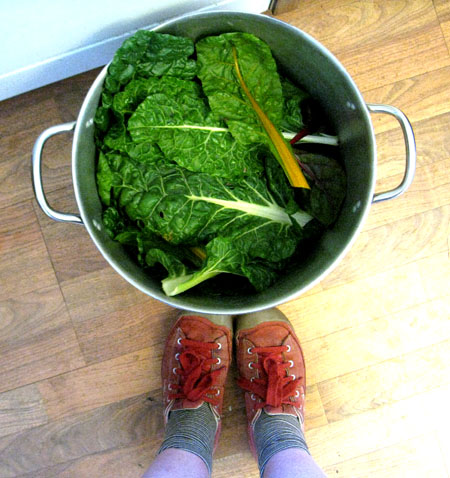
I love this time of year when the garden is finishing up with all the produce, ripening one last bunch of tomatoes before the cold, offering another handful of beans before the vines all dry up.  This is when I start evaluating what worked for me and what didn’t.  Today I was thinking about Swiss Chard versus kale.  I do enjoy eating kale but I don’t ever crave it like I do chard.  Yesterday I cut a huge pot of greens (pictured above) from my garden.  I realized that I hadn’t been harvesting them and most of my kale is about to bolt.  While I was cutting the kale I discovered that most of them were covered in that variety of aphid that matches the silvery green of the leaves and are attracted to all members of the Brassica family.  My chard was untouched by aphids.  As I was picking the two different kinds of greens I was thinking that perhaps I should only grow Swiss chard from now on because I prefer it.  I like how it gets more tender than kale when steamed or sauted.  I like that my chard hardly ever has pest problems (something likes to lay tiny white eggs on the backs of the leaves but these are easily rubbed off).

If you don’t love eating something you shouldn’t be growing it in your yard.   This is what I usually think.

Then I started thinking that I should find out which one is healthiest to eat.  So I pulled out my trusty “Laurel’s Kitchen” with the nutritional tables in the back and had a look.  Both are very high in vitamin A.  Kale has twice the calcium of Swiss chard but half the potassium.  What I got from doing that comparison is that both are very healthy and have different essential things to offer.

Is it better to plant a garden that gives you the broadest spectrum of nutrients your body might need, or better to plant only what you love best?  What do you think?  How do you decide what you will plant again and what you will not bring back to the spring garden?  What were the biggest winners of your garden this year?

Here are a few of my old and new favorites that I will plant again and again:

Forellenschluss Lettuce:  this romaine lettuce does so well for me and is never bitter.  Plus I love the red speckles it’s covered in.

Lazy Housewife Bean: I grew it for the first time this year and it did much better than “Kentucky Wonder” or “Bluelake” have done for me.  They were so flavorful and tender even when large.  It’s a Romano type bean.

Helda Bean:  this one grew right next to the Lazy Housewife and to be honest, I couldn’t tell the difference.  They both grew so well for me and produced such great beans I will plant both again next year.

Sungold Cherry Tomato:  my very favorite cherry tomato.  I always plant this variety every year and couldn’t possibly get tired of them.

Rainbow Chard:  this will always be the variety of chard I grow.  I cannot imagine giving up the brightly colored stems for an all white stemmed variety.  It never fails to taste great and do well for me.

Willamette Tomato:  I generally prefer heirloom tomatoes even though they don’t tend to fruit as prolifically as the more modern hybrids do.  However, I always plant one or two of the hybrids so as insurance if my heirlooms don’t do well.  This one turned out to be not only prolific but had great flavor.  I will grow this one again next year.

Nantes Carrot:  I used up the seeds I had from a previous year.  I can’t remember specifically which Nantes it is but I let one go to seed and will continue planting these because they have done so well for me.  I’m not sure how to get the seeds out of their tiny spiky pods so if anyone knows, please tell me!
Your turn!

Warba Potato Yield: Summer 2009

potatoes 2

I have begun to take better garden notes so that I can share my data here for those who might find it helpful.  Normally I let my potatoes remain in their bed and harvest them as I need them but this year I needed to free up my potato bed for some blueberry bushes.  This gave me the opportunity to weigh them all at once.  The potato plants were already dying and so I stopped watering them anyway.

Here are my notes on this year’s potato planting:

Potato variety: Warba (early season)

Number planted: 24 seed potatoes

Bed size: 4′ x 16′ raised bed

Space between seedlings: 10″ between them in their rows, rows were 24″ apart

Planting date: April 17

Harvest Date: First picking July 3, complete harvest July 12

Growing conditions: typical cold wet spring and cold wet early summer with some brief intermittent heat waves.  Barely watered the bed at all.  Though I planted them in trenches 6″ deep, I failed to continue to cover them as the plants grew which generally gives a higher yield.  Didn’t mulch at all which also tends to produce higher yields.  I would call the growing conditions less than ideal, though the soil they were planted in was very good; loose and full of well composted material.

Total yield: 30 lbs 15 oz

Or you can think of it as 1.29 lbs of potatoes per seed potato planted.  Or you can think of it as a fraction over 1 pound per square foot of garden space.

This is a respectable yield but would have been much better if I had followed good potato growing practices.  I also think it’s important to note that some varieties of potatoes can get much larger and grow a lot longer before harvest which translates to a much greater pound per square foot ratio.  I nearly always harvest my potatoes as “new potatoes” because I like young potatoes best.  So that affects the yield as well.

What this information should do, though, is reassure you that even under less than ideal growing conditions, potatoes do produce well and are rewarding to grow.