
 I have been doing a lot of preserving in the past month. It has been my intention for weeks to hang up the jar tongs and get back to seriously writing the second draft of my book. I have this goal that I will have the second draft finished by January 1, 2011. Instead of writing I've been making batches of pesto (I'm up to a little over 20 batches in the freezer), canning stewed tomatoes (17 quarts this weekend), making quadruple batches of enchilada sauce to freeze, and yesterday I made an enormous batch of soup using the last of the summer vegetables (corn, green beans, summer squash, tomatoes, new potatoes, and fresh basil).
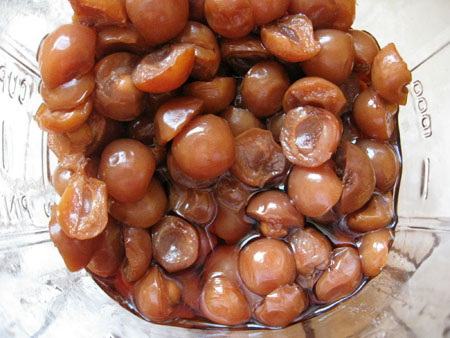
The elderberries are winding down now. I've got 11.25 cups of elderberries getting sauced in 2,250 ml of 100 proof vodka in the pantry. I have at least another 6 pounds of foraged elderberries in the freezer.
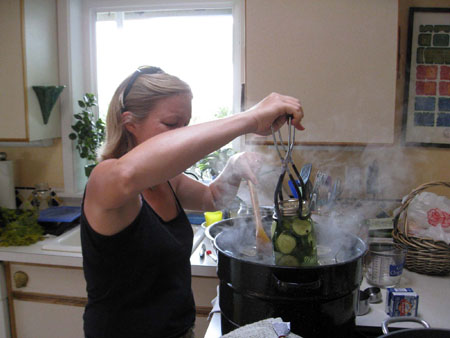
I could be done now. I could throw the towel down and leave the ring. But if I did that I wouldn't have any dill pickles. There weren't enough pickling cucumbers for me to make cucumber pickles but right now there are these giant locally grown cauliflowers and cabbages that I can pickle the same way I do the cucumbers. I made the cauliflower last year and it was an enormous success- not only between myself and my husband but all of our friends who tried them loved them also.
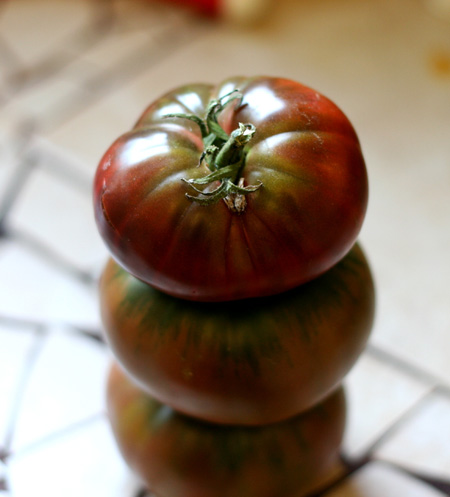
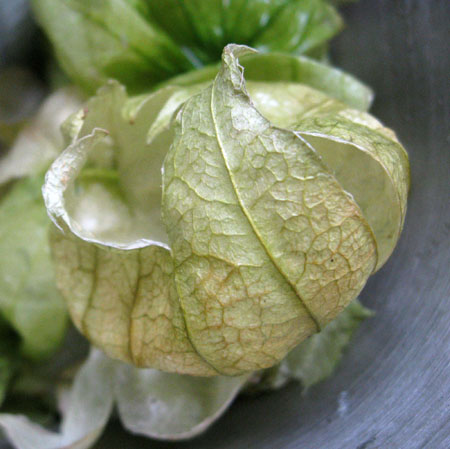
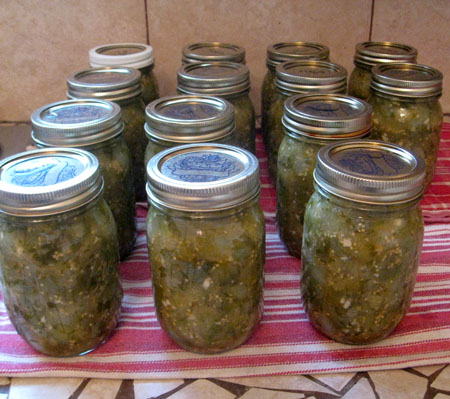
I have another nagging ambition: I want to make a green tomato salsa. I want to do it just like the tomatillo salsa I made a couple of years ago. Tomatilloes, like tomatoes, had a rough year and I didn't manage to get any through u-pick. But I have a Mexican cookbook that mentions that green enchilada sauce can be made with either tomatillos or green tomatoes.
I want to try it!
There's more. I saw a recipe for dill pickled green tomatoes that I think I'll regret not trying all year if I don't make them.
And what about the eggplants? They're 4 for a dollar at Bernard's and I wanted to grill a huge bucket of them for the freezer...
I keep telling myself to stop, but the truth is that doing these preserving activities makes me feel good. It makes me feel more hopeful and excited about the coming months during which time anything good or bad might happen but one thing's for sure: I'll be eating home pickles and making soups from tomatoes that have no pesticides on them. When I'm feeling low I can make a pasta with grilled eggplant and pesto.
So the book takes a little longer to write. I've been thinking a lot about my characters as I preserve, thinking about how important these same activities are to them. More so since they can't just buy things from a grocery store the way we can today. The inspiration for the story originally came from doing urban homesteading activities and asking "What if oil didn't completely run out but became so limited and so costly that the average person couldn't drive a car because they couldn't get oil and what if they couldn't buy anything plastic? What if no one could afford to buy imported foods except on rare and special occasions? What would you have to know how to do in order to survive being more isolated in the community you're in?
These are the things I think about while processing 50 pounds of tomatoes.
What I've realized is that preserving as much food every year as I can, at least in the fall, isn't just a silly little project I enjoy doing, it's a big project that I feel a deep need to participate in. I need to know how to preserve food I have now so I can eat it later. Because I already mostly eat seasonally my choices in produce are about to become much more limited. I buy a few things out of season, but not much. No green beans, no corn, no out of season fruit (except for Max), no summer squash, no tomatoes, no eggplant, no asparagus, no peas, and no fresh herbs I can't still get out of my garden.
It isn't a fancy rich person's hobby.
I'm not rich and I'm not fancy.
It isn't an indulgence as I've been telling myself it is just because I know I have other things to do. It's one of the most important things I do for myself and my family every year.
So I'm reminding myself, and anyone else who needs a similar nudge, that preserving your own food (no matter how much or how little you do) is using the kind of knowledge that allowed humans to cross the ocean. Practicing this knowledge is what allowed humans to settle down in one place. Unfortunately it's also what allowed armies to march far enough to conquer and oppress other countries. Food preserving is responsible for so many huge changes in human history.
It's something I look forward to every year.
I want to try it!
There's more. I saw a recipe for dill pickled green tomatoes that I think I'll regret not trying all year if I don't make them.
And what about the eggplants? They're 4 for a dollar at Bernard's and I wanted to grill a huge bucket of them for the freezer...
I keep telling myself to stop, but the truth is that doing these preserving activities makes me feel good. It makes me feel more hopeful and excited about the coming months during which time anything good or bad might happen but one thing's for sure: I'll be eating home pickles and making soups from tomatoes that have no pesticides on them. When I'm feeling low I can make a pasta with grilled eggplant and pesto.
So the book takes a little longer to write. I've been thinking a lot about my characters as I preserve, thinking about how important these same activities are to them. More so since they can't just buy things from a grocery store the way we can today. The inspiration for the story originally came from doing urban homesteading activities and asking "What if oil didn't completely run out but became so limited and so costly that the average person couldn't drive a car because they couldn't get oil and what if they couldn't buy anything plastic? What if no one could afford to buy imported foods except on rare and special occasions? What would you have to know how to do in order to survive being more isolated in the community you're in?
These are the things I think about while processing 50 pounds of tomatoes.
What I've realized is that preserving as much food every year as I can, at least in the fall, isn't just a silly little project I enjoy doing, it's a big project that I feel a deep need to participate in. I need to know how to preserve food I have now so I can eat it later. Because I already mostly eat seasonally my choices in produce are about to become much more limited. I buy a few things out of season, but not much. No green beans, no corn, no out of season fruit (except for Max), no summer squash, no tomatoes, no eggplant, no asparagus, no peas, and no fresh herbs I can't still get out of my garden.
It isn't a fancy rich person's hobby.
I'm not rich and I'm not fancy.
It isn't an indulgence as I've been telling myself it is just because I know I have other things to do. It's one of the most important things I do for myself and my family every year.
So I'm reminding myself, and anyone else who needs a similar nudge, that preserving your own food (no matter how much or how little you do) is using the kind of knowledge that allowed humans to cross the ocean. Practicing this knowledge is what allowed humans to settle down in one place. Unfortunately it's also what allowed armies to march far enough to conquer and oppress other countries. Food preserving is responsible for so many huge changes in human history.
It's something I look forward to every year.

 l love

 I have 13 batches of pesto in the freezer. That's 13 up from last year. There were many bone-damp cold winter evenings when I would have given a lot to defrost some pesto to put on hot pasta. Something so green and fresh tasting never fails to bring warmth to the cold. I never buy pre-made pesto any more. It is always such a disappointment compared to my own. I would like to get 9 more batches in the freezer before basil disappears from the market.


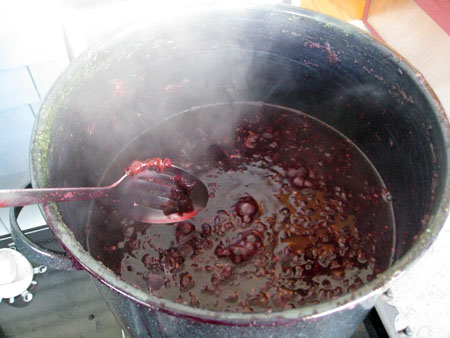
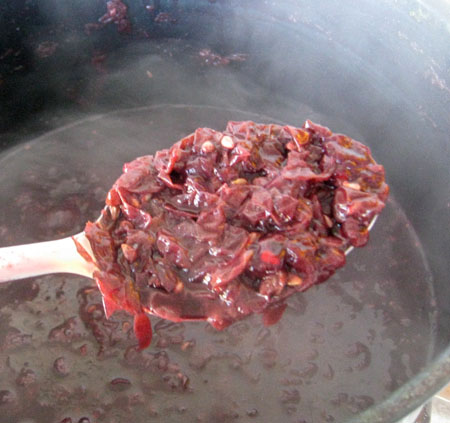
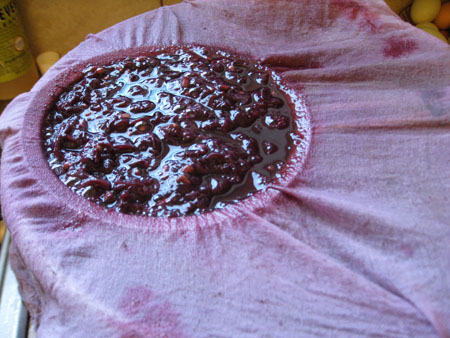
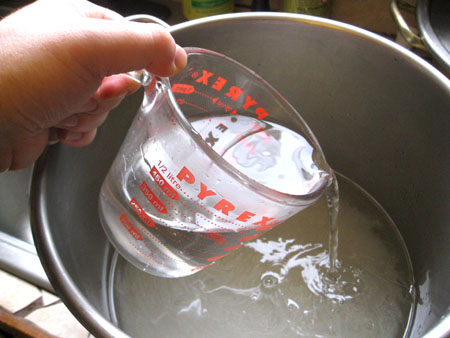 Sugar syrup is used primarily in canning fruits. It's easy and fast to make. I will list the different strengths of syrup you may want to make for different projects and the approximate yield. Deciding how much you need for a given recipe is (I've found) a guessing game. There are a lot of variables such as how much fruit you put in each jar, whether the fruit is diced or in large chunks, and how many jars you end up filling which depends on the same variables. When I am going to can a big batch of peaches or pears I start off making a triple batch of syrup because I nearly always need at least that much. If you run out in the middle of your project it is very easy to make more. So don't let yourself get too worried. If you make too much you can store the extra syrup in the fridge indefinitely or if you prefer you can put the extra in a jar and can it to use later.
I have never used a heavy syrup for my peaches and pears. I usually use either a light or an extra light syrup. The sugar syrup helps to maintain the fruit quality and color as it sits in your pantry. You can also use fruit juice or plain water, but I prefer the more traditional sugar syrup. It is all a matter for your personal preference.
General instructions:
1. Choose a pot that will acomodate the quantity of syrup you are going to make.
2. Measure the sugar into the pot.
3. Measure the corresponding amount of water into the pot and stir really well.
4. Put it on the stove on high heat and bring it to a boil while stirring it.
5. By the time it comes to a boil the sugar should be well dissolved, it is ready for use.
List of syrup types and the ratio of water to sugar for each one:
Type of syrup: % of sugar Sugar Water Yield of syrup
Extra-Light 20 1 1/4 cups 5 1/2 cups 6 cups
Light 30 2 1/4 cups 5 1/4 cups 6 1/2 cups
Medium 40 3 1/4 cups 5 cups 7 cups
Heavy 50 4 1/4 cups 4 1/4 cups 7 cups
Sugar syrup is used primarily in canning fruits. It's easy and fast to make. I will list the different strengths of syrup you may want to make for different projects and the approximate yield. Deciding how much you need for a given recipe is (I've found) a guessing game. There are a lot of variables such as how much fruit you put in each jar, whether the fruit is diced or in large chunks, and how many jars you end up filling which depends on the same variables. When I am going to can a big batch of peaches or pears I start off making a triple batch of syrup because I nearly always need at least that much. If you run out in the middle of your project it is very easy to make more. So don't let yourself get too worried. If you make too much you can store the extra syrup in the fridge indefinitely or if you prefer you can put the extra in a jar and can it to use later.
I have never used a heavy syrup for my peaches and pears. I usually use either a light or an extra light syrup. The sugar syrup helps to maintain the fruit quality and color as it sits in your pantry. You can also use fruit juice or plain water, but I prefer the more traditional sugar syrup. It is all a matter for your personal preference.
General instructions:
1. Choose a pot that will acomodate the quantity of syrup you are going to make.
2. Measure the sugar into the pot.
3. Measure the corresponding amount of water into the pot and stir really well.
4. Put it on the stove on high heat and bring it to a boil while stirring it.
5. By the time it comes to a boil the sugar should be well dissolved, it is ready for use.
List of syrup types and the ratio of water to sugar for each one:
Type of syrup: % of sugar Sugar Water Yield of syrup
Extra-Light 20 1 1/4 cups 5 1/2 cups 6 cups
Light 30 2 1/4 cups 5 1/4 cups 6 1/2 cups
Medium 40 3 1/4 cups 5 cups 7 cups
Heavy 50 4 1/4 cups 4 1/4 cups 7 cups





Recent Comments