Choosing Chicken Breeds For Backyard Flocks

red-light-district-2.jpg

Choosing Chicken Breeds For The Back Yard Flock

Choosing what breed of chickens to get for your first flock can be confusing.  There are a lot of different kinds to choose from and how will you know which ones are going to be right for you?

Start off by answering the following questions:

How many chickens will you have?

Are you raising chickens for meat, eggs, or both?

Are you planning to butcher your hens when they stop laying?

How important is it that your hens be friendly?

The number of chickens you will have can influence your choice of breeds.  For example: if you are on a city lot that only allows three hens then you will want to make sure you get breeds that are known to be excellent layers.  If you are able to have more hens than you strictly need to keep your family in eggs you might want to choose a few excellent layers and also choose a couple of heirloom breeds for the enjoyment of variety.  In my own flock I have three excellent layers and one that isn’t as prolific but is much prettier than the others to look at and this gives me pleasure every day.

It is important to know what your purpose in raising hens is.  If you plan to raise them just for butchering you will want to purchase only game breeds such as Old English Game or Cornish Game.  If you want to have hens that lay well but can be butchered after they slow down you will want to be sure to get a dual purpose breed because these are breeds that not only lay well but make good table birds.

Most people who are starting back yard flocks of chickens, especially in urban environments, are doing it for both eggs and family enjoyment, not usually for butchering.  If this is your purpose then it’s important to choose poultry breeds that are known to be friendly.  I am going to make some personal reccommendations but it’s really important that you understand that a breed description is only general and that hens, like people, can be highly individual.  I have heard stories of Rhode Island Reds being mean but the two I’ve had weren’t at all mean, though they are both fairly shy.

The specific suggestions I’m going to make are suitable for families who are wanting great egg production from friendly birds.  If you need more information on game breeds or layer breeds I am going to include links at the bottom of this post to some great breed information sites that can help you pick what birds you want.

My favorite picks for small(ish) back yard flocks:

Buff Orpingtons– these are a golden colored dual purpose breed that lays well and has a sweet docile disposition.  Cora, our Buff Orpington, was so sweet you could pick her up and carry her around.  She was huge and funny and we loved her.  Lays large pinkish-brown eggs.

Ameraucanas*-this breed is an excellent layer of green eggs (only the purebred ones lay blue eggs) and is a very strong forager.  They are friendly and curious to people but bossy to other birds.  Our Easter Egger (see footnote), Claudine,  was great at foraging, leading the flock, and loved her sun baths.  Lays green medium sized eggs, often with double yolks.

Black Sex Links– this is a hybrid breed that is sexable at birth so you aren’t at much risk of ending up with a rooster.  They lay incredibly well, are friendly, pretty, sturdy, and not skittish.  Lays large brown eggs.

Golden Sex Links– this is the same as the Black Sex Link but is golden in color.  Excellent layer of large brown eggs.  friendly, curious, loves kitchen scraps, not bossy.  Ours has been a great addition to our flock.

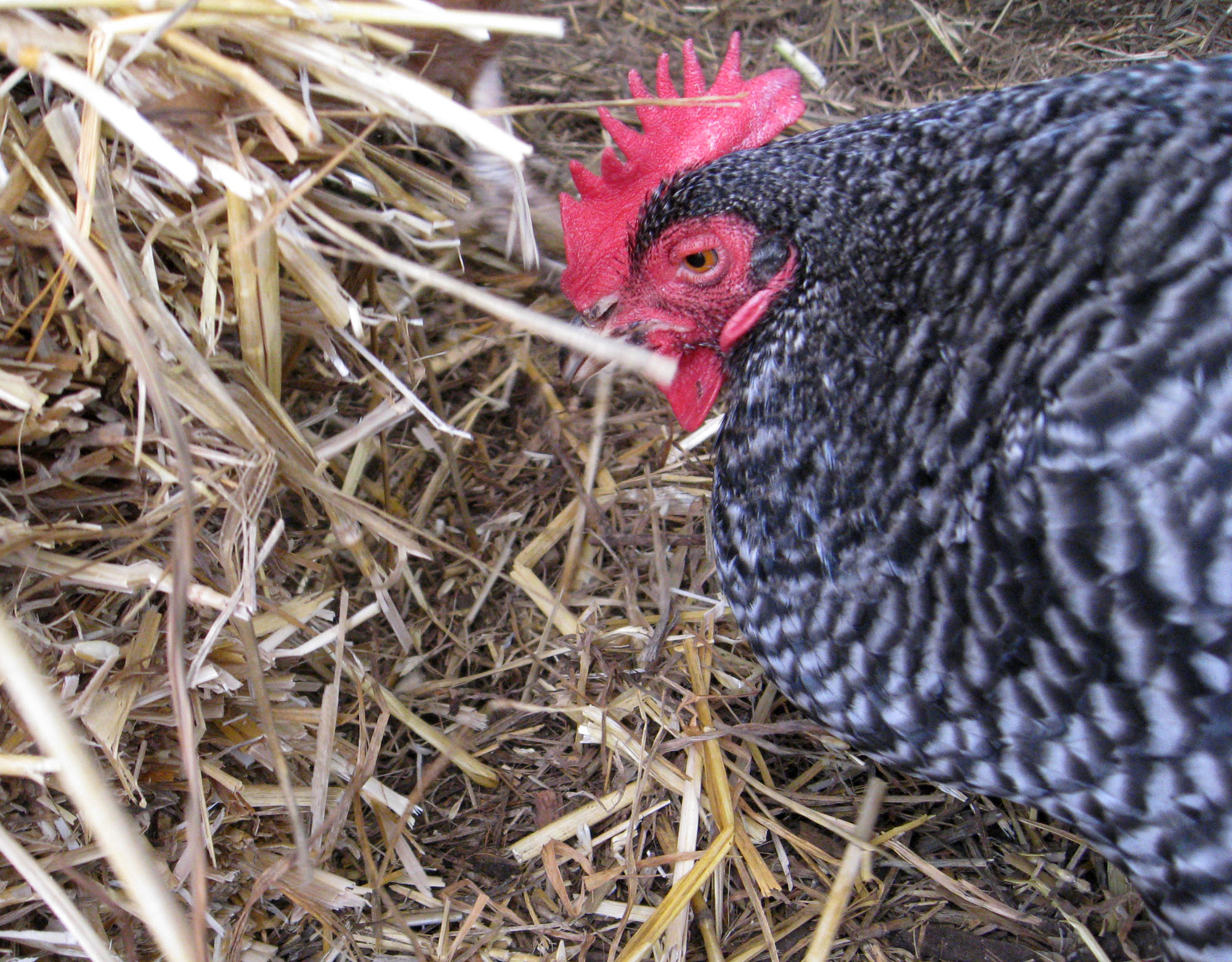
Plymouth Barred Rock– this black and white striped breed is very pretty.  They lay moderately well.  In general the breed is known to be docile, easy to handle, and friendly.  Ours (Flower-bud) is quite shy and skittish but we love how pretty she is and she lays medium sized pinkish-brown eggs so how can we really complain?  I love having at least one striped or dotted hen in the flock.

Rhode Island Reds– this is an excellent layer of large brown eggs.  They are active but generally docile, though the cocks in this breed are notorious for their aggressiveness.  Our own experience is that ours are a little shy but will not be mean if you are quick enough to pick them up and they will come around and be calm if you spend some time with them quietly.

Most of the breeds I’ve just mentioned are readily available in feed stores.  If you get confused when faced with choices at the feed store never hesitate to ask for advice from whoever is the chicken expert.  And be sure you already have their nursery set up before you bring them home!

Here are some fantastic on line resources for reading about poultry breeds:

Henderson’s Chicken Breed Chart

Feathersite

Backyard Chickens

*Also known as Araucanas.  The truth is that mostly what you find in the feed stores are mixed breed versions of these birds, not purebreds.  Which is fine by me since I don’t need papers on my chickens.  Just so you know, if you’re buying a bird by either of these names, what you’re really buying is what is known as an “Easter Egg” hen.
April In The Kitchen Garden

seeds-2

April is a difficult month in the garden because it’s still cold enough in many places that snow is still falling in fits and although we see blossoms everywhere across the country telling us that the sap is flowing in the fruit trees and the soil is beginning to warm up, it still isn’t time for planting warm weather crops such as tomatoes and peppers except in those southern states where spring starts in February (Florida, Southern California, Texas, for example).

Although it’s tempting to begin buying tomato starts as they are appearing in the nurseries right now, it is best to wait at least another week to buy them.  Because there are so many different regions in the U.S. with different micro-climates, I will keep my information fairly general.  What each gardener needs to do is be very clear on what their USDA zone is (or use some other more specific zoning chart such as the Sunset Zones) and be sure to find good resources for information specific to your gardening zone that will help you map out what you should be planting and when.

To find out your USDA climate zone you can look them up on line at The USDA Plant Hardiness Zone Map.

Another great resource for anyone who needs local information on when to plant things is to call your local Extension office to find out what information they have.  Sometimes they will have detailed free brochures that tell you when to plant things in your region.  The Extension Services. These services generally get their information from the most local universities and from reputable sources like master gardeners or agricultural instructors.

You can also get information on local planting guides from books printed specifically for your region.  Be sure to check your local library for any good regional vegetable gardening guides.

The best resource for the Pacific Northwest is The Maritime Northwest Garden Guide produced by the Seattle Tilth.  If you live and garden in the Pacific Northwest and don’t have this magazine sized guide then you need to get it.  It cost $10.00 when I bought my copy at Powell’s Books in Portland.  It covers gardening month by month in all the regions here and lays out not only planting guides for vegetables, but flowers, herbs, and perennials as well.  It is also the guide the Master Gardening program gives out to its students.

I will be doing some research and soliciting some help from experienced gardeners to help me map out what gardeners need to be doing in their kitchen gardens month by month because this is very important information we all need and I’d like it to be handy right here.  But that will, of course, take some time.

In the meantime I would like to give a very general idea of what should be planted in most gardens this month:

Dark Leafy Greens: kale, chard, spinach, Asian greens

Lettuces: all kinds of lettuce greens, and herbs

Cold weather crops: broccoli, cauliflower, cabbage, turnips, beets, carrots

Onions: shallot bulbs, onions, bunching onions, leeks

Peas: peas, favas

Potatoes!

Late April: all the warm weather crops such as tomatoes, peppers, squash, beans, and melons.

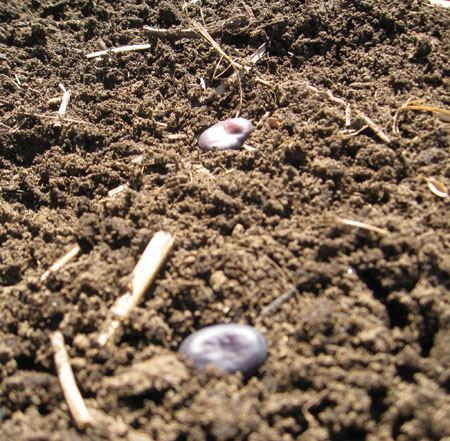
Now get out there and plant some seeds!

Welcome To The Farmhouse Finishing School

fresh-hay

Long before the current recession hit us all in the face my friend Chelsea and I were getting excited about learning to do things like can jam and make quilts.  We spent a lot of time together cooking and talking about projects we could do ourselves.  She lives up in the hills in a rustic house on acreage doing her laundry outside like a hillbilly.  I lived in town and got to do my laundry inside but was obsessed with growing as much of my own food as possible.

Together we learned a lot of new/old skills and at some point we got to talking about how so few people were learning to do the kinds of things we were learning to do from their own parents.  It used to be that you learned to can vegetables from your mom or your grandmother.  You learned to quilt from them as well.  They taught you how to mend clothes, darn socks, and cook a basic pie crust.  It occurred to us that all of these skills were still important and that someone needed to be teaching new generations how to do things like take care of their furniture and plan meals so that food isn’t wasted.  In fact, someone needs to teach everyone to do basic cooking.

We thought it would be great to start a finishing school for people interested in urban homesteading and everyone who’s interested in increasing the quality of their lives through mastering the home arts.  We had so much fun imagining ourselves as the head mistresses of the school and planning the curriculum.  Neither of us has any money to open an actual school but the desire to open such a school has never stopped exciting me.

What I finally realized is that with a website (or blog) I can do the next best thing: online courses!  With the use of photos, instructions, and even some video instruction, I feel that we can teach each other to do almost anything.  I am fortunate enough to know and be friends with nearly every kind of crafts person and I have solicited their help to provide useful information and instruction on all kinds of topics such as: raising chickens, growing herbs and vegetables, making your own medicines, sewing, and home economics.

My goal is that this become a great reference for urban homesteaders with only the highest quality information and writing.  Hopefully it will feel like a fresh, bright, and inspiring place to come.

I already have a lot of recipes to upload once they get finessed just a little so be patient as I begin to build the content up.  Come back often and feel free to make suggestions on the kind of content you most desire us to cover or questions you would like to have answered.

Please come and visit again!