Food Fight: The Real Vegetarian

What does it mean to be a vegetarian?  Am I a “real” vegetarian?  Are you a real vegetarian?  Does being a vegetarian mean I do no harm to any living beings?  Do vegetarians have to sign contracts and be evaluated by an official jury to become “real”?

In my last Food Fight post I outlined how I eat in detail.  I mentioned that I’m a vegetarian and I also mentioned that I eat eggs and cheese and that my feelings are a little mixed about it because eating cheese supports the meat industry and I’m not keen to do that yet I have not chosen to draw my line there at this point in time.  Renee, a commentor on the last post, brought up some other details about the dairy industry which I felt were valid points.  But then she told me I can’t call myself a vegetarian because I eat cheese and cheese is made with rennet (enzymes from a cow’s stomach).

Dictionary definition (Webster’s Unabridged Dictionary): A person who does not eat or does not believe in eating meat, fish, fowl, or, in some cases, any food derived from animals, as eggs or cheese, but subsists on vegetables, fruits, nuts, grain, etc.

There you have it.  Some vegetarians (like myself) do eat food derived from animals but don’t eat the flesh of animals.  I can most definitely call myself a vegetarian and I most definitely am NOT a vegan.  I don’t think it can be more clear than that.

I was raised as a vegetarian from birth.  It’s the way I eat.  I didn’t choose to be a vegetarian in the first place but later when I tried eating meat and fish and fowl I made a conscious decision to remain a vegetarian but NOT because I love animals.  I did it because it feels natural to me to eat the way I was raised.  It suits my body.  I feel good when I eat this way.  I like it.  Meat is gross to me.  I’m sorry if it disappoints anyone to know that I didn’t choose to be vegetarian for noble reasons.  Actually, I’m not sorry.  Eating is very personal and I chose what’s right for me.  What’s right for me includes eggs and cheese.

My concern for the well being and kind treatment of animals is very real and very strong.  But it’s important to reiterate that I don’t think eating animals is wrong.  If it’s wrong for people to eat animals then it’s wrong for lions to eat gazelles.  If lions can’t eat gazelles, they die off.  Nature made many animals dependent on eating other animals and in the natural setting the way the food chain is set up helps maintain a balance of animals and insects that works.  Nature also made many animals into omnivores, giving them the edge of not being dependent on one type of food.  Humans are such animals.  Just because we can choose not to eat meat doesn’t make it wrong for us to choose to eat it.

I take my cues from nature.  Humans are omnivores and as far as anthropologists can know – they always have been.  I choose to be an omnivore who doesn’t eat the flesh of animals.  I respect other people choosing to eat animals and I equally respect other people who choose not to eat any food derived from animals.  The only thing I don’t choose is to ignore how animals raised for food are treated and cared for.  There is a respect inherent in nature between prey and quarry.  In the distant past of human history that respect was inherent in us.  It is only in our more recent history that we have disconnected from our more natural relationship with animals as food.  People used to have to work harder to have their meat.  A human having to kill the meat he/she eats is a lot more respectable than going to the grocery store and buying a slab of animal flesh any time you want it.  So we’ve lost our way and have, through overpopulation, ruined the balance that nature designed to keep the earth healthy.

I care very deeply about the treatment of all animals but that doesn’t mean I think it’s wrong that they are used for food.  When Max rescued a baby garter snake we fed it tadpoles from our little pond.  I’m not gonna lie, I didn’t love hunting out those babies and offering them to the snake but I knew, as all people must know, that a snake is not a vegetarian creature and it would be entirely wrong to impose on it a diet it can’t survive on.  So we fed him the tadpoles and knew that it was nature’s circle of life in action.  But those tadpoles, until we snatched them out of the pond, lived a natural life.  The frogs who live in that pond were not put there by us.  They found our pond and chose it as their habitat.  My point is (in case it isn’t obvious) is that those tadpoles weren’t raised in a tank in my house under unnatural conditions and they were eaten by their natural predator.

There’s one last point I feel it’s important to make: if you are a vegetarian because you don’t want to cause any injury or death to other living beings, you are fooling yourself to think that you can eat in such a way that you never cause harm to other living beings.  Every single person on earth who eats food, no matter what diet they choose, causes injury and death to other living beings.  It is 100% impossible to farm vegetables and grains without also causing collateral damage to mice, rabbits, frogs, voles, snakes, gophers, and sometimes the larger animals whose natural habitat we’ve claimed for raising crops pushing them to new territories where they sometimes starve to death as a result.  Most people don’t care about insects but even if you’re growing food organically, as I do, there are casualties to insects and sometimes small creatures.  When I was working in the community garden a few years ago I was weeding and accidentally speared a frog with my weeding tool.  I don’t know if it was fatal or not.  I picked the poor fellow up and put him out in the adjacent field of tall grasses.  If I, a careful and caring gardener, can injure a frog while weeding, imagine what all those tractors and plows and harvesters are doing to the other little creatures.

We all eat at the expense of other living beings.  That’s not an opinion, it’s a fact of life.

Where you draw the line is for you to decide.  Vegans do considerable less harm to other living creatures than meat eaters do, but everyone has blood on their hands.  I think the main thing to focus on is how we are treating the animals we’re raising for meat and eggs and how they’re killing these animals before they reach the dinner table.  These things matter a lot.

I said that was all but there’s one more thing I need to say: vegans and vegetarians fighting each other over little details of diet is like Catholics and Protestants fighting over how to interpret the bible and the proper way to worship.  The majority of vegans and vegetarians have some common beliefs and concerns and if we all want meat eaters to care about the ethical treatment of animals then it won’t do to fight each other.  There will always be meat eaters, there is never going to be an entire planet of vegetarians and vegans.  People are omnivores.  What is an obtainable goal is to inspire all meat eaters to care how their meat is raised and to inspire meat eaters to eat less meat over all of it can be raised humanely.  This should be a shared vision between all people.

I am a vegetarian.  Please don’t tell me where to draw my line.  Please consult the official definition of vegetarian before telling people what they can and can’t call themselves.

My Favorite Recent Pinterest Recipe Finds

I have been truly enjoying using Pinterest as a way to keep track of ideas and recipes I’d like to try. I want to share a few of my recent food finds with you:


I pinned this one because a friend sent me a box of lemons and I’m trying to decide what to do with them. I’ve settled on making lemonade and this recipe has a nice twist. I love this blog “Girl Cooks World” – reading it is like traveling with her to different destinations I might never have gone on my own and has the added benefit of having only gluten free recipes so if you thought being gluten free meant a limited diet – you’ve got to check out this blog!


Vegan tamales. Cheeky Kitchen is a great blog that has gone vegan (at least for the time being). The photographs are great and the food looks amazing. I’m just learning to make tamales so I was interested to try her version. The blogger is also a kind and generous spirited person – impossible not to love.
 

Potato leek soup with the best garnish ever! This blog “Apron Strings” is a daughter/mom team and they make a lot of simple food with charming presentations.

Source: azestybite.com via Angelina on Pinterest

Beer, cheese, and sun dried tomatoes? I’m not sharing this bowl with you. You will have to make your own! This is from “A Zesty Bite”.

I read close to 200 food blog posts a day and being able to visually bookmark and then share the best of what I find is so much fun. If you’re looking for any particular kinds of recipes that you haven’t found on your own yet – feel free to tell me what you’re looking for and I’ll keep my eyes open for them and share my findings with you.  Even if it’s a meat based recipe – I read them all.

Food Fight: The Way I Eat (and don’t be a food bully)

Everyone has their own idea about what a balanced good diet consists of and lately I’ve been feeling extremely annoyed with how aggressive people can get about their own dietary choices.  When someone starts eating a particular way and they feel great, lost weight, cured their aches and pains, or fixed all their relationships because of this plan for eating they’ve adopted it can become like a religion – it can transform people into evangelical zealots.  Everyone’s diet has scientific proof to back up its claims.  Special diets have become more than a way to eat – they’re becoming a way to fix everything in your life.  Panacea.

People are claiming that you can fix mental illness with gut health and that going gluten free can cure autism.  If the way you eat makes you feel fit, healthy, and happy, then you’re probably eating in a way that suits your body well.  What pisses me off is when you assume that the way you eat will make everyone feel the same way you do.  People have different bodies and though we all roughly have the same organs and functions – no two bodies are the same.  Eating lots of lentils makes me feel great but a good friend of mine can’t digest them.  No matter how much science can say we’re the same, clearly we’re not.  Most of my friends love sweet peppers and feel good when they include them in their diet but I cannot digest them without difficulty – we are not all the same.  It is clear that the foods that are optimal for my health will not necessarily be optimal for someone else’s health.

Outside of some ethical and environmental concerns I think everyone should listen to themselves and their own bodies to determine what way of eating is best for them and sharing ideas with friends is fine but trying to pound a vegetarian’s head with a juicy pork butt trying to convince them that meat should be a big part of their diet is a real asshole maneuver.  Don’t do it.  Likewise, a vegetarian trying to shove grains down the throat of a paleo eater and trying to guilt them about animal killing is an asshole maneuver.  Don’t do it.

More important than what kind of food or what balance of food groups a person eats is how our food is raised, grown, and processed.  That should concern everyone and it doesn’t yet.  Highly processed foods, high fructose corn syrup, and pesticides should be concerning everyone.  And it isn’t yet.  But even when it comes to these food issues about which I care passionately it isn’t helpful to be a jerk about it.  Be an example and an inspiration, not a bully or an evangelizing zealot.

My Eating Philosophy:

I am a vegetarian who eats eggs and dairy.  I eat mostly produce that is in season, locally sourced whenever possible, and organic as much as I can afford.  I eat mostly home made food and don’t eat a lot of processed food which keeps preservatives and high fructose corn syrup to a bare minimum in my diet.  The kind of food I make is largely influenced by Mediterranean style cooking with some Asian, Indian, and Mexican dishes thrown in.

I eat a wide variety of produce, legumes, fruits, nuts, seeds, grains, eggs, and dairy and I believe that’s the best way to cover all nutritional needs.  I don’t believe any of the food groups are inherently bad for you (unless you’re allergic) and the recommended balance I strive for most closely matches that of Michael Pollan and Andrew Weild.

I believe that genetically modified organisms are not food.  All “food” that contains produce that’s been genetically engineered should be labeled so I can choose not eat it.  The biggest GMO crops in the US are corn and soy so if you don’t want to eat GMOs yourself, your best tactic is to buy only organic corn and soy products because GMOs (at this point in time) cannot be labeled organic.

I believe that one of the single most important things all of us can do to is to buy as much of our food from local sources as possible.  I don’t think I’m a zealot and I certainly buy some imported foods, but I believe it’s important to make the effort to tip the scales of your food buying to local sources for both freshness, supporting local economies, and strengthening local food sheds.

The healthiest eating habits for ME are: to eat 3 meals a day, (heavy breakfast, medium lunch, light dinner).  Eating modest portions of things like cheese is important to my health.  It doesn’t feel natural or comfortable to me to eat more than three meals a day and I do better when I don’t snack often.  Eating sweets only occasionally is best.

I don’t believe in dieting but I do believe that if you are very overweight and you want to lose some it’s helpful to count calories at least for a while to see how many you are consuming in a day and to gain perspective on how many calories your favorite treats have as well as monitoring how many calories you burn in a day.  You don’t have to be scientific and I don’t think it’s ever healthy to starve yourself.  No matter what anyone else says about weight loss – there’s no magic diet or pill or method.  Calories in and calories out is still a very important aspect of losing weight.  How many calories you consume in a day does not determine how healthy you are, of course, as you could be consuming all your calories in fats or all of them in sugar.  But it’s an important factor.

I know this works for me because I lost all my pregnancy weight (40 lbs) using portion control, increased exercise, and eating what I consider a well balanced diet.  I never gave up eating cheese or bread or pasta but all of these things I ate with more moderation than I had been while pregnant and right after giving birth.  I didn’t lose weight fast but I lost it steadily and I never felt better in my life than during that period.  So for me – that’s what works and what makes me feel good physically.

The details

No Meat:

I was raised as a vegetarian so I’ve been one since I was born.  I’ve tried many kinds of fish and meat at different times to see if I really wanted to be a vegetarian and what I discovered every single time is – the flesh of animals disgusts me.  Everyone living needs to eat food that used to be alive so it’s not that the animals used to be alive that bothers me (because plants used to be alive too) it’s the carcass factor.  I do not recognize carrion as food.  Humans are animals and so I don’t see any real difference between eating cows and eating humans.  In addition to that, I loathe the texture and the taste of flesh.  The taste and texture make it very hard for me to swallow it and once I choke it down it takes some work to keep it in my stomach.  Nice, huh?  And if I manage to keep it in my stomach I then get to enjoy the fun of my body struggling to digest it (the sensation of iron balls in my stomach for days and sometimes meat-burps for a few hours).  Especially red meat.  I will happily remain a vegetarian for life.

I don’t, however, think it’s wrong for other people to eat meat IF they are only eating meat that was raised in as kind and natural a setting as possible and killed in a setting as clean and unfrightening as possible.  CAFOs are evil and so are slaughterhouses.  The only ethical way to eat meat is to eat animals that are pastured on small farms and who don’t have to wait around in a pen smelling the fear and blood of the animals being killed before them.  The most ethical and honest way to consume meat is to either raise and kill it yourself or hunt for it.

One last objection to eating meat is that I don’t think it’s a sustainable way to feed the 7 billion people on this earth.  The amount of land it takes to feed the meat appetites of humans means that the only way to meet it is through CAFOs.  Raising meat in a natural and healthy way is much too costly and takes much too much land to keep up with meat eating.  I believe that meat production is doing a tremendous amount of damage to our land (so is factory farming).  I think the only way forward for human beings as a species is to eat a lot less meat.

Or stop having so many babies in order to drastically reduce the world population.  That’s the choice but at this moment people are still eating tons of meat and having tons of babies.  The future is not looking like a good place to be for all the people being born right now.

Eggs and Dairy:

I have an uneasy relationship with eggs and dairy.  I can raise my own hens (and have) and give them a great comfortable life as loved animals and do not feel bad about stealing their eggs from them (if anyone wanted to steal my eggs I’d give them all away – unfortunately by the time mine come out they’re useless plus too small to eat).  It doesn’t harm them for me to take their eggs.  However, I can’t always have hens and buying eggs from the store is ethically unsound.  I obviously buy “cage free” eggs but that term doesn’t mean the hens are actually roaming around a nice big yard.  Sometimes all it means is that all the hens are allowed to crowd together inside a giant pen.  That’s not a good healthy life for any hen.  I try to get eggs from local people who I know have hens for their own use and are truly cage free.

Dairy, on the other hand, doesn’t harm the cow it’s coming from necessarily (if the cow is raised with care and allowed to pasture) but you can’t keep a cow in milk unless you keep her having calfs and if all calfs born were girls who could produce more babies and milk – this would be harmless.  Except that obviously it can’t work that way.  To produce dairy a number of bulls are always being born and if no one is eating them then you have animals who eat food but don’t provide anything in return.  Dairy farming only works because people are eating the boys.  This bothers me as I don’t want to contribute to the meat industry.  But everyone who knows me knows I love cheese almost more than any other food.  This is really a tough one for me and I am heading towards a personal compromise of simply eating less dairy overall.

Grains:

I have no argument with grains.  Not wheat, oats, barley, quinoa, rice, buckwheat, millet (though I don’t like millet), corn… grains don’t disagree with me or make me sick and I’m tired of people trying to convince me that I’m poisoning myself but just don’t know it.  I’m tired of people vilifying something humans have been eating without problem for thousands of years.  People didn’t start having horrible dietary issues until the mid-twentieth century when processed foods took over the food scene.  So enough with this!

Many people DO have allergies to wheat and those people need to cut it from their diet.  I respect that.  Most of those people had health problems that eventually led to a discovery that wheat was destroying their intestines and preventing them from absorbing or using all the nutrients from their food.  That’s serious shit.  That’s real and it matters – but don’t tell me that everyone is allergic to wheat because it just isn’t so.  Also – if you want to not eat any grains because you think that’s the best way to eat – good for you!  But don’t try to convince me that they are evil for everyone.  Thousands of years of eating them and digesting them without difficulty is enough proof for me that for most people grains are an awesome way to get nutrients and protein in their diet.

I do believe that eating a variety of them rather than only eating wheat and sticking mostly to wholegrains is the healthiest way to go.

Produce:

Fruit and vegetables.  I eat a lot of them.  Mostly vegetables.  Organic is always best.  I can’t always afford to buy all organic but if I could – I would never eat produce that has been sprayed with pesticides.  I pay attention to the “Dirty Dozen” list and use it as a guideline of priority when I have to make a choice.  I think eating mostly local produce is even more important than eating local grains.  I allow myself a small amount of imported produce like avocados but always try to maintain a mostly local buying policy.  This automatically means I eat mostly seasonally too.  No tomatoes in winter.  No zucchini or green beans or eggplants in winter either.  I’m not a zealot and if friends make me a meal in winter that uses all summer ingredients I’d never say a thing or think twice about eating it and appreciating their hospitality.

I like most vegetables except for peppers.  I can’t digest sweet peppers and even hot peppers can be tricky.  Cayenne doesn’t ever seem to be a problem.  There are other vegetables I’m not that fond of but I’ll eat them if you put them in front of me.  I find Jerusalem artichokes to be a bit dreary.  Broccoli rabe is okay but I don’t love it so I never buy it.  Same with kohrabi.  Turnips aren’t a favorite of mine and neither are radishes though I’ll eat both and I’m fine with it, but I never get all excited to cook with them.  Bitter greens… oh bitter greens and how everyone loves you but me.  I can take small amounts of bitter greens but I don’t enjoy a big plateful of them.

Fruit – I like most fruit except mangos and papayas.  I like dried figs a lot but don’t care for them fresh.  Fruit eaten only in season is a revelation.

Fats:

I don’t believe fat is evil any more than I think grains are evil.  I believe in baking with butter and cooking with olive oil.  Those are my staples.  I don’t bake a lot so I don’t personally consume a ton of butter.  I use it on toast sometimes but I use a modest amount.  I use safflower oil and am making an effort to only get vegetable oils that weren’t made from GMO crops.  My mom says I “grease up” my food but in reality I don’t use a crazy amount of oil when I’m sauteeing.  Usually a tablespoon for stir fries and two tablespoons for large batches of soup.  My big oil extravaganza is when I roast vegetables which I’m trying to reform now to use less.  I eat whole fat cheeses (low fat cheeses are rarely worth eating) but I do use low fat milk and low fat yogurt because I like them better.

I don’t eat much fried food.  Fried food makes me feel gross and sometimes even gives me the burps.  While I love french fries and apple fritters, I eat french fries seldom and doughnuts even less.  I love spring rolls but rarely eat those either.  It is lucky for me that fried food upsets my stomach enough to keep me from making a habit of it.  I am a girl naturally attracted to fats and starch and the two go brilliantly together when fried.  I don’t believe fried foods are part of a healthy diet except as a treat.

Legumes:

I eat a lot of legumes.  I love beans, lentils, peas, and tofu.  I am only buying organic tofu now because one of the biggest GMO crops in the world is soy.  Some people can’t digest legumes well and if I didn’t I probably wouldn’t eat them or at least not often.  However, I have never had difficulty digesting legumes.  I especially love lentils and feel really good eating them.

Nuts and Seeds:

I eat a modest amount of nuts and seeds.  Mostly nuts.  Mostly walnuts.  I love peanuts, walnuts, pecans, cashews, pine nuts, and almonds but since where I live I’ve been managing to get walnuts for free I eat more of them than any of the others.  I hate hazelnuts.  I really do.  I like sunflower and sesame seeds but don’t eat too many of them.  I even like pumpkin seeds but I don’t buy them because it’s ridiculously easy to roast your own.  But I don’t like the hulls and it’s tedious to remove them…so I end up not eating them at all.

Sugar:

I don’t view sugar as my enemy either.  I don’t eat a ton of it.  I don’t even eat a lot of it.  My son has a sweet tooth but I don’t.  Eating too much sugar or eating even a single overly sweet dessert (lemon bars come to mind) can make my throat swell up or make me feel gross.  While I don’t crave sweets usually if they’re sitting around and I start eating them I have a hard time stopping.  In our house we use both refined and unrefined sugars.

How I Got So Fat (telling the story for the last time)

I’m very fat.  I gained 30 pounds when I broke my hip and was bedridden for three months and couldn’t do any real exercise for six.  During that time I might have done things differently – like do isolated strengthening exercises that didn’t involve my hip (after the first three months because before that if I moved my body in any way I was in excruciating pain) and I could have eaten much lighter food to make up for my complete lack of movement.  I certainly could have chosen not to eat so much food out of boredom and depression.  But that’s not what I did.  I started drinking beer more heavily (which eased my pain in more than one way – I should have opted for pain pills instead of beer – but I didn’t) and I ate lots of sweets which I normally don’t.

Following that first 30 pound weight gain we made a move to Oregon and commenced the most stressful years of our lives.  I take psychiatric drugs for major depressive disorder and generalized anxiety and OCD.  When we moved I couldn’t handle my anxiety so I upped my dose of Paxil which previously hadn’t caused any weight gain in me because I’d been on the lowest dose but when I upped my Paxil I gained 20 more pounds that year.  I didn’t know at the time that it was the Paxil.  I was still eating way too many sweets and cheese and having seconds on meals and drinking a ton of beer – so it was obvious to me that I needed to address my bad habits to stop the weight gain and start losing.  I started exercising more rigorously and frequently and I stopped eating all sweets, I cut down on my beer consumption, and took greater care with my meal portions and being much more moderate with my cheese and bread consumption.  At first I lost a little and I was really encouraged but because I was in a constant state of panic I upped my Paxil again.  I gained another 20 pounds even though for that whole year I was working hard to lose weight.  It worried me but I figured I just needed to give it more time.

The fourth year we were here I upped my Paxil one more time.  Yes, it really was helping to keep the anxiety from exploding my head.  That year I gained another 20 pounds.  I started wondering if I had a thyroid problem or some other health issue that might be causing me to gain weight no matter how much I exercised or watched my portions and avoided snacking and desserts.  I had my doctor test me and thyroid issues were ruled out.  So I let it go and tried just living with the fact that I was huge and nothing I did seemed to change it.  But the next year I started taking Kung Fu and after a lapse in the beer restraint I recommitted to drinking in moderation and still every time I got on a scale it was higher than before.

I had horrible visions of having to be removed from my house with a crane.

I was then at my highest ever: 268 pounds.  Finally I went to my doctor and we looked at my charts over the years and she made the connection between the Paxil and the weight gain.  She hadn’t caught it before because she wasn’t the one prescribing.  I got off of Paxil and started taking Celexa instead and immediately lost 11 pounds.  I worked hard and lost a few more.

Since then the stress of my life has only escalated and I have been for months now drinking too much alcohol and eating more food than I’m actually hungry for and not exercising as much as I need to.  I have been in a very dark place and it’s had a profound effect on my habits. I haven’t regained all my weight but some has crept back.  I am putting this whole story down here on my food blog because it’s important to me that others know that three quarters of my fat was not gained because of bad eating and drinking habits or lack of exercise.  The bulk of it is medication related.  However, I have fallen back into snacking late at night on cheese sandwiches and eating seconds of my dinner and eating more food than I’m hungry for and drinking too much.  As long as I am in this depressive cycle it’s going to be hell trying to reestablish healthier eating practices and regular exercise.

Yesterday I found out I am going to be going to Blogher Food in Seattle in June.  This has given me a very clear motivation to work harder to get back on track with my health and fitness goals.  I have been to two Blogher conferences now being super fat and completely ashamed of how I look.  I don’t want to do that a third time.  I don’t have time to lose all the weight I need to lose by June but I can at least aim for a goal that will make me look less like Alfred Hitchcock and more like a lady.

I don’t diet.  I gained lots of weight with my pregnancy and it took me two years but I lost all of it not by dieting but by exercising, relearning what a single portion of cheese really looks like, counting calories until I got more honest about my intake of foods, especially those foods I have a weakness for like cheese.  I still ate cheese, I still cooked with oils, I still buttered my toast, and I still ate plenty of pasta.  I lost 40 pounds this way and until I broke my hip I maintained my weight.  I felt great.  I wasn’t thin but I certainly wasn’t fat.  I had good self esteem and I ate what I consider the healthiest diet for me which is vegetarian, lots of vegetables, some fruits, grains (polenta and pasta being favorites with some rice), lots of legumes (lentils, black beans, kidney beans, split peas), eggs, nuts,  and dairy in moderation.

I want to get back to feeling good about my own body.  I’m tired of being ashamed and feeling uncomfortable.  So in another post I’m going to lay out for my own purposes (and yours if the subject interests you) what my ideal diet looks like in more detail.  What my best eating and exercising practices consist of.  This way I can revisit it to remind myself when I start slipping.

I am not sharing this to invite anyone to tell me what miracle way of eating will fix me, cure my mental illness, or make my fat melt right off.  The way we eat is not a panacea – no matter how good you feel the way you eat your health is more complex than just being a matter of diet and exercise.  I will never adopt another way of eating just because some scientist (or friend) swears it will cure all my skin problems and magically cure my mental illness and make me thin.  I know that people will continue to seek the ONE TRUTH, the ONE DIET, the ONE TRICK, and the ONE CURE because people can’t seem to help themselves.  When they think they find it, no matter how many times they think they’ve found it before, they become apostles of their chosen panacea.  I think it’s stupid.  If you have a way of eating that works wonders for you and makes you feel great – that’s awesome.  But don’t assume or insist that eating lots of meat is going to fix me or that not eating gluten will revolutionize my body and I’ll realize that I’ve been sick with an allergy my whole life and didn’t even know it.  It might be true for you – and I salute you for having found this out about yourself so that you can heal yourself and feel great.

We’re all individuals and our bodies are not the same.  You honor yours.  I’ll honor mine.

The Handmade Lotion Trials: Second Batch

Look how pretty this lotion is – so creamy and smooth.  I scented it with rose and bergamot essential oils.  I actually prefer a lotion with little or no scent but I had to mask the distressing animal scent of the shea butter.  Shea butter is NOT made from any animal parts.  It comes from a tree.  However, it smells and repells me like lanolin does.  The point is – isn’t this lotion pretty and doesn’t it look perfect?

One hour later it has hardened and separated.  What the hell?!  What happened?  It was so smooth and perfectly emulsified!  From what I’m reading this may be because the water and oils weren’t at the same temperature when emulsifying.  I don’t have a thermometer.  Actually, I have two but neither of them are working.  The candy thermometer never worked and my digital one is so confusing to use that I’ve given up.

Before the gross disaster occurred, I used a little of the lotion and I liked it better than the first batch.  It has a slightly sticky feel to it which while not ideal is more preferable to me than the slick greasy feel of the coconut based first batch.  For the sake of remembering what I used I will record ingredients and amounts here:

1 tsp yellow beeswax

1/2 cup distilled water

1 tbsp glycerin

1 1/2 tbsp shea butter

2 tbsp sweet almond oil

1 tbsp wheat germ oil

enough rose and bergamot essential oils to mask the unpleasant odor of the shea butter.

This recipe is based on the Cocoa Butter and Rose Cream from the book “Natural Beauty Recipe Book” by Gill Farrer-Halls.  I couldn’t get my hands on real rose water so I used distilled plain water instead.  There is a worldwide shortage of jojoba oil right now so I didn’t want to contribute to that shortage, instead I used wheat germ oil which is used in a few other lotion recipes in this book.  After doing a lot of reading about the various butters I concluded that shea butter was the least greasy and best option for my skin, so I used that instead of cocoa butter.  The essential oils called for were rose, frankincense, and chamomile oils.  Each of these oils is very expensive.  Way out of my price range.  Luckily I already happen to have some good quality rose oil so I used that and then found I had bergamot which I love in combination with rose.  By this time – as you can see – it is barely the same lotion as the original but I kept all proportions of oils to waters the same and followed the instructions.  Except for the part about hand whipping it.

Here are my notes on making lotion up to this point:

  • I have a strong aversion to the less refined butters – the smells are repugnant to me.  This bothers me because the less refined they are the more nutrients they have to offer my skin.  The less refined a butter or oil is the stronger its scent.  So in future, if I want to have an unscented or very faintly scented lotion I’m going to have to buy the ultra refined de-scented oils and butters.
  • I might need to figure out how to reset my digital thermometer.  Or buy a really reliable non-digital one.
  • Lotion making is easy, except for when it’s not.
  • Hand whipping the oils and waters is ridiculous.  I’m all for doing things without having to plug anything in but I was whipping and whipping and nothing was changing.  No magical emulsification was happening.  My blender knows how to GET IT DONE.
  • Even when the scent of something is pleasant to me (rose and bergamot) I am bothered by it being too strong.  Luckily for me (I guess) pure essential oils (particularly the citrus ones) lose strength much faster than their synthetic counterparts.  I remember how I used to wear perfume and smoke cigarettes and I loved all that strong scent around me*.  Not so much any more.
  • What lotion works for your skin is highly personal.  You may have tactile preferences or your skin may be drier or less dry and this will dictate what feels good on it.  My mom much prefers the first batch of lotion because she likes the greasier feel of it.  The slight stickiness of the second batch bothered her, whereas I didn’t mind it so much but was super bothered by the slick feeling of the first batch.
  • So if you plan to make your own lotions, expect to do some experimentation and trials of your own.  Do smaller batches (such as half batches)** so you don’t waste too many ingredients at a time.  If you don’t like a batch for yourself have your friends try it and if any of them like the ones you don’t – give it to them.
  • Take notes on what you do each time.  If you give a lotion to a friend  because they really like it – they may want to make it again so if you can tell them precisely what you did (any substitutions or deviations from the instructions) they can remake it and you will have effectively spread knowledge and skills that individuals should not lose to industry.

What’s up next: today I will attempt to re-heat the separated lotion and re-emulsify.  I’m hoping that if I heat them at the same time in the bowl they’ll be at the same temperature when I blend them.  All lotion making instructions have you heat the two elements separately and then blend so this might not work.  However, when I make my creamy mustard vinaigrette I put all the ingredients in one container and then emulsify – they’re all at room temperature… but why can’t I heat them together so they’re continually at the same temperature and then emulsify?  Why shouldn’t that work?  Well, today I’ll be able to report on whether it does or doesn’t.  I know one thing – those essential oils when heated can lose their scent which is why you always add them last when the lotion has cooled.  So I’ll have plenty to report after today’s experiment.

Stay tuned for the results!

*No lie.  I have always loved the smell of fresh cigarette smoke and when mixed with Opium perfume – so wonderful.  Or, at least, I used to love it.  There is a lingering nostalgia for me in those two scents but no longer any real pleasure in them because they are so poisonous to both people and the environment.

** There is a slight issue of batches being too small to be effectively emulsified in your blender so if you do half batches of recipes that are already somewhat modestly sized, you may need to emulsify by hand.  Good luck with that.

Food Trends: The Return Of The Twinkie


You might like to suggest that a “food” that has remained so steadily in the American consciousness doesn’t qualify as a trend but once any food finds its way onto a stick you know it’s hitting the big time and will make a guest appearance with bacon in the next couple of months.  Growing up in a hippie whole grain no-processed food household I was deprived of the opportunity to get my hands on these little treats until I was a young adult.  One afternoon  a supply of Twinkies showed up at my house via one of my room mates.  I know I had to have eaten one because the memory of that chemical aftertaste has stuck with me all these years.  More memorable than that was the experiment I conducted over the next several years in which I held onto a package of these spongy treats to see how long it would take for them to go bad.  But everyone already knows the result of that experiment: Twinkies are incapable of molding.  They just get drier and drier until they crumble when you show them to yet another disinterested house guest.  Why is no one ever as amazed as I am?


I predict that you will soon be seeing recipes for: Twinkies Charlotte, custard pie with a Twinkie crust, Bacon wrapped Twinkies on a stick, Twinkie Po’ Boys, Twinkies with cherries flambe, Twinkie bread pudding, and Twinkie stuffed rice krispy treats.

Blackberry Wrangling Progress

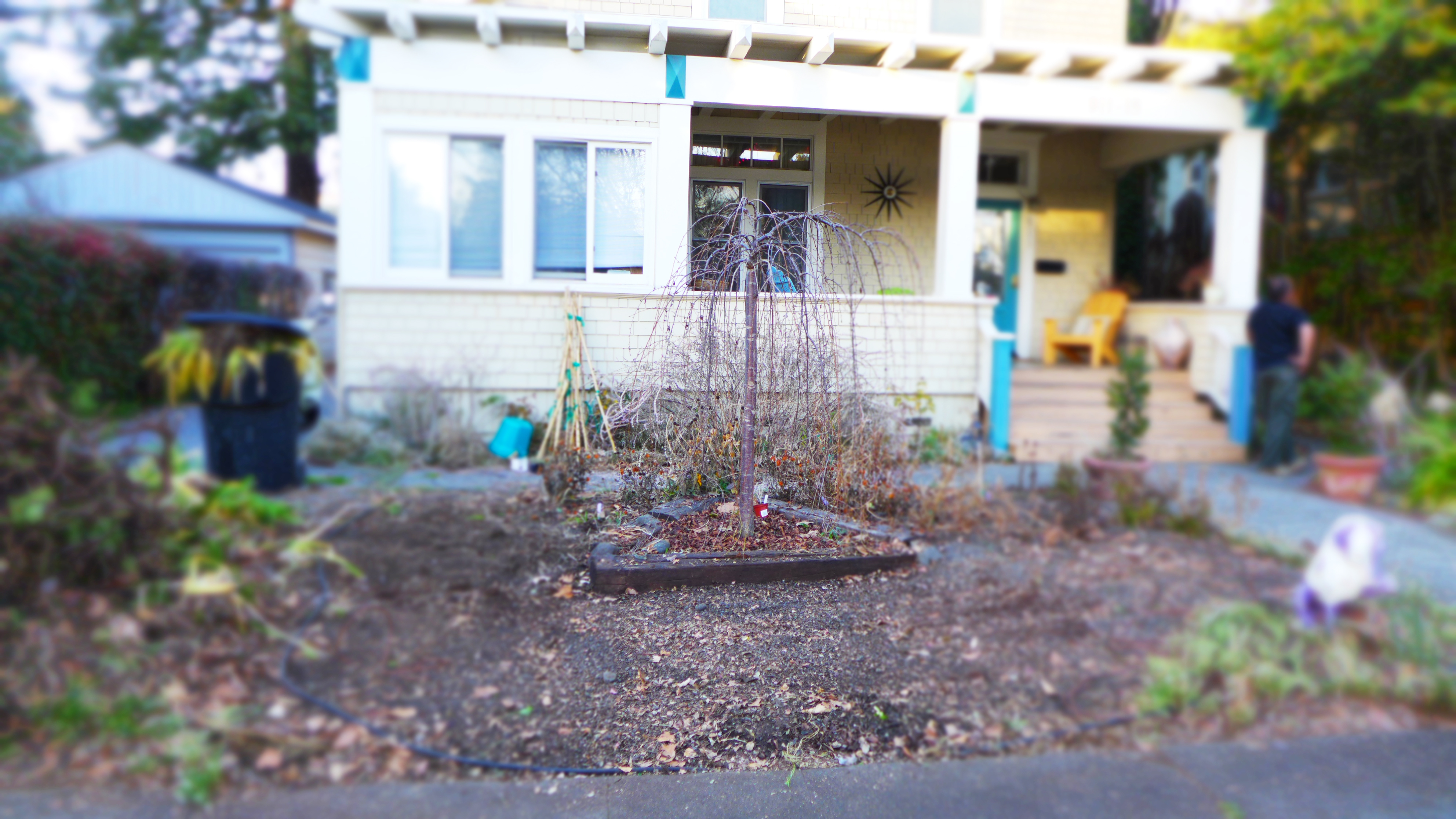
I’ve been working hard and looking like I tame lions for a living.  I have some thorns still stuck in my skin.  But it’s totally worth it and all the hours I’ve put into clearing the blackberries have been very meditative.  I’ve been meditating quite a bit about the evil neighbors who killed these brambles with pesticides without my permission.  Bastards.

I’ve also been meditating on cleaner and brighter thoughts too, such as how good it feels to be out there working in the plants and the fresh winter air.  Meditation for me isn’t about clearing my head of all thoughts, because that is impossible (I’ve tried many times), but about letting my thoughts come to me organically and letting them say their piece without interruptions.  I let the stream of consciousness be heard as it is formed.  Inevitably my mind settles down after a while into a theme and a flood of thoughts about something my mind has been chewing on gets released.  I always feel better afterwards.

I’m about a third of the way though the task.

Wait, no, more like a quarter.

Crap, maybe only like an eighth.  But who cares?  You can see part of the back fence again!

The Benefits of Going Broke

(When you’re broke and you’re trying to make your own lotions and salves a little mold in your home grown stash of calendula is a depressing discovery)

I don’t like being broke.  If I had a million dollars I wouldn’t feel bad about it.  I don’t hate money.  I don’t think being poor is necessarily more virtuous than being rich.  Bad ethics abound in both economic groups.  On the other hand, it is not my life’s ambition to be rich.  While I certainly wouldn’t mind having such security I don’t need to be rich to have a good life.

But being broke sucks.  This past month we have had to catch up on bills and it has been staggeringly difficult.  We almost had our power turned off, we almost had our internet turned off, we almost had our trash cans toted away, we couldn’t afford to buy half the groceries we’re used to buying.  And we weren’t living extravagantly before this either, so don’t be thinking “Boo hoo, so you can’t buy any brie cheese and caviar, so sad for you and your richie-pants life.”  Naw, we were already living modestly.  We have simply reached a new level of broke.

So you’d think this was a super depressing month.  Oddly enough, it wasn’t.  It was humiliating standing outside in my pyjamas begging the power guy not to cut off our power for five days, but the humiliating bits aside, I have felt oddly refreshed.  I have had to become more resourceful and creative.  I am having to become better at household management.

The Benefits of Going Broke:

  • Better Pantry Management.  I have had to pay much closer attention to what I already have in my pantry and to rely on its contents a lot more.  This is great because in years past I’ve had too much left over in my freezer.  We should be eating everything I freeze within a year.  This summer we packed it full of good stuff but still had lots from the previous year.  I am now using up older stock and am checking the canned goods and the freezer before going to the grocery store.
  • Learning new skills.  I couldn’t afford to buy the expensive Eco laundry detergent we usually use.  I mean, I could afford to buy the really cheap heavily perfumed crap but I refuse to go toxic just because I’m broke.  So I made my own detergent.  It’s easy, it’s super cheap, and it’s natural if the bar soap you use is natural.  I’ve thought about trying this for a long time but as long as I could afford to buy good stuff I lacked the motivation.  So far the home made stuff is working really well.  I did accidentally use a perfumed soap (I was tricked by packaging that hid the heavy synthetic perfume – the ingredients were otherwise completely natural) so next time I’ll be looking for a different soap for it, but the point is that it costs so little to make your own detergent and it takes practically no time at all.
  • Getting more creative in the kitchen.  When you can’t just run out and buy whatever you might want from the store to make dinner with you become more creative.  Especially if, like me, you’re used to having constant access to cheese to cook with.  I’ve been wanting to experiment with making more vegan meals or at least meals that don’t revolve around cheese.  I’m not planning on becoming vegan but I am interested in reducing the amount of dairy we consume by a lot because I don’t want to support the dairy/meat industry which is contaminating our waterways and using up land to feed the cattle instead of being used to feed people directly.  Not being able to afford much cheese has forced our hand in this direction and I’m not sorry.  Yes, some days I really crave cheese but it’s good for me to eat a lot less of it.
  • The combination of going super broke but also being able to keep our house has turned my attention back to the garden.  I have a large city lot and it isn’t being used nearly to capacity for growing edibles and herbs.  I’m pretty good at growing food and plan to get better at it.  If you have beds going all year with at least greens then you can rely a lot less on buying produce.  Prices on all foods are rising and I don’t know that it will ever go down again.  To offset it I will grow more of my own.  It does make a difference.  Even though growing your own isn’t free (water, seeds, starts, tools) it is exponentially cheaper to grow your own once you have beds in place and tools on hand.*  This year my focus will be on having at least a few beds well planned to supply us with dark leafy greens throughout winter and growing more of my own produce for canning and freezing.
  • It has made me more appreciative of the generosity of others.  When you don’t need someone’s help or largesse it’s so much easier to take it with grace and pride still in tact.  When someone is generous with you when you’re in a precarious situation it can either ding your pride and make you want to refuse such generosity (which is stupid) or you can take it, be thankful for it, and find ways to reciprocate that will keep your pride in tact.  A friend bought Max a pair of his favorite kind of shoes on E-bay (we couldn’t find any in his size here in town or anywhere near by) and I almost cried it was so sweet.  They ended up not fitting, which sucks, but that friend’s generosity was really felt by me.  I’m making her some cloth dinner napkins in return.  I may have almost no money but I have things I can make and share with others as a way to thank them for the things they help me out with.  My pride is not bothered by an exchange of things between people.  My pride isn’t wrapped up in money and I don’t have a hard time accepting gifts of money from friends and family who are inspired to do so, provided that I think how I can give back to them either now or later.  So I think being broke is making me feel more generous with what I do have and this is allowing me to not concentrate as much on what I don’t have.
  • Simplifies life.  The best thing about going bankrupt was not having any debt and not having any credit cards anymore.  We’ve been debt and credit card free for two years now.  The hard part is that when we don’t have cash to pay our bills, we’re on the line, we have zero safety net.  I worry a lot about medical issues because Philip and I both have no health insurance.  In the past I would know that in an emergency I could use my credit card for things.  We have zero safety net now.  That’s scary.  The flip side of this is that without credit cards we can only spend what we’ve got.  So there are a lot of things we simply can’t afford to do.  When you have extra resources it seems there are so many situations where there’s pressure to do things (vacation to see family, joining friends out to dinner, etc) and you find yourself squeezing things into your budget you can’t truly afford because you know you can put it on your card and pay for it later.  When you have no cards you just have to say no.  It’s that simple.  Maybe it sounds terrible to some but to me it’s freeing.

Hopefully this month will not be quite as brutal as last month but there’s always something.  All our pets are due for vaccinations and I’m really working hard not to think about the leaks in the house and all the things that could go wrong that I can’t afford to have going wrong.  I’m choosing to focus on the fun of being literally forced to do what I love best in the world: getting back to urban homesteading.

And writing.  Writing is always free.

*In arid desert cities where water is much more scarce and droughts are common water tends to be way more expensive and sometimes rationed so this may not actually be true in those places.  I live in the Pacific Northwest and one of the blessings of living in the land of rain is that water is rarely scarce.)

Winter Squash Ricotta Pasta Recipe

I love winter squash and don’t get tired of eating it.  I love it roasted, made into smooth soups, or made into chunky Thai soup with tofu and curry, and I love it mashed up with butter, salt, and pepper.  This pasta dish is my new favorite to eat winter squash.  One of its charms is that it doesn’t call for a lot of ingredients and another of its charms is how fast and easy it is to prepare.  I have made it several times in the last few weeks and always in a huge batch because I need leftovers for lunches for three adults.  I give you the recipe for a regular sized batch but if you want a giant pot of this just double the recipe.  The sauce will become very thick after cooling so you can add a little water when reheating if you like.

Winter Squash Ricotta Pasta Recipe

6 servings

Winter Squash Ricotta Pasta Recipe

Ingredients

  • 1 Tbsp olive oil
  • 1 onion
  • 1 cup winter squash (cooked)
  • 1 cup ricotta
  • 1 cup water
  • 2 garlic cloves, finely chopped or pressed
  • 1 tsp salt
  • 1 tsp thyme
  • 1/4 tsp nutmeg
  • 1/8 tsp cayenne
  • black pepper to taste
  • 12 ounces angel hair pasta

Instructions

  1. Heat the olive oil in a pot on med/high heat. Add the onion and saute until translucent and browning slightly. While sauteeing the onion, fill another pot full of water with a pinch of salt and bring to a boil, then add your pasta.
  2. Puree the winter squash, ricotta, water, and all the seasonings in a bowl using an immersion blender (or you can use your food processor for this). When it's completely smooth add it to your onion and let it come to a boil and then turn the heat down to med/low while your pasta is cooking. Stir frequently. Take off the heat when your pasta is done cooking.
  3. Drain the pasta, add it to the pot with the sauce and toss it well.

Notes

This whole recipe comes together within fifteen minutes for me. I suggest having all your ingredients measured out before you begin so you don't have to mess with it while everything is cooking. If your onion is done but you aren't ready to add the sauce to it - be sure to take it off the heat so it doesn't burn. If you want your sauce to be thinner - just add more water. You can use broth, of course, but this recipe doesn't require broth for flavor. One other thing - I've played around with the cayenne amounts and I like it somewhat spicy. If 1/8 tsp seems like too much for you then start with less.

What kind of winter squash you use is up to you. I prefer rich dry squash varieties such as butternut, buttercup, hubbard, or Queensland blue. To bake squash you cut them open, gut them of seeds, halve or quarter them and put on a baking sheet and cook in an oven at 375 degrees until soft. There is no need to cover in foil or oil the baking sheet or the squash.

Schema/Recipe SEO Data Markup by ZipList Recipe Plugin
http://stitchandboots.com/2012/01/29/winter-squash-ricotta-pasta-recipe/

Winterizing Your Home: Plugging Up the Small Holes

Our farmhouse is over a hundred years old and consequently it has many funky charms such as several non-standard door sizes (tall people sustain more surprise head injuries in our house than anyone else) and windows installed at floor level upstairs.  We love it.  What’s less charming about a house this old is that it’s had plenty of time to be worked on by all kinds of unskilled people who have made a bungle of things.  This dryer vent is a perfect illustration.  Clearly the house wasn’t originally built to accommodate an automatic washer and dryer.  Some clever jerk decided that this wasn’t a problem.  To install dryer vent: sledgehammer a hole into the outside wall the approximate size of a dryer vent et voila!  All set.  Don’t mind the big gaping corner through which light and air travel freely – this allows you to breath fresh air even in mid winter.

WRONG.  Anyone living in an old house knows that one of the biggest problems is paying to heat them.  They are famous for these “creative” bits of crappy handiwork that let the heat drain out.  You don’t even need gaping holes like this one, there are so many ways the heat gets out.  So this weekend, because we got a really high heating bill we couldn’t afford, we set about identifying some problems and fixing them.  One problem is that we didn’t put all our storm windows down.  Duh.  Let’s not talk about how dumb that was.  All the functioning ones are now in place.  This hole in the laundry room is something I was vaguely aware of but didn’t think too much about until we got our highest ever electric bill.

You probably don’t have this exact problem in your house.  So I’m not offering this up as a tutorial on how to fix the hole around your dryer vent.  You might, however, have some other little gap letting heat out of your house.  If you have the money (or ACTUAL skills to fix holes properly) you will obviously do it the professional way.  We have no money.  We are so strapped for money at this moment I’m stressed out that I’m going to have to buy cat food today*.  So how do you go about plugging up holes in your house with zero money and no professional house-fixing skills?  You get creative is what you do.  Some day I’ll have that gap fixed with plaster or something but this weekend I came up with a good workable solution:

My main concern was that a dryer vent could potentially get hot.  I know it isn’t likely, especially if you dry all your clothes on low heat – but I’ve had a house fire and I’m paranoid about creating flammable situations.  At first I was going to make a cotton tube and fill it with dryer lint.  We thought that had a kind of poetry to it.  However, cotton is quite flammable as far as fibers go.  So is lint, for that matter.  Wool is not very flammable.  You can burn it but the fire goes out very quickly.

Philip told me this and I didn’t actually believe him.  In an effort to locate a piece of 100% wool in my craft room I did burn tests on swatches of what I thought was wool.  I discovered two things, a) most of my wool fabrics are not 100% wool but are wool and synthetic blends and b) real wool doesn’t burn easily.  The real wool I found was a pant leg from an old vintage pair of army pants.  I trimmed it and sewed it into a tube and stuffed it (loosely) with cotton batting.  Then Philip stuffed it around the dryer vent like a collar – pushing it into the gaps.  It worked perfectly.  No more air flow at all and no more light.

So how can you use my solution to help you come up with your own?  If you have the money or skills, fix your holes professionally.  If you are in a similar situation as I am then think about how you might fill small (or big) holes or cracks to stop drafts.  Some ideas to consider:

  • Fabric scraps can be very useful in plugging up holes.  The more dense the fabric, the more effective.  Tight weave fabrics are your best bet.  Wool is a fantastic insulation fiber so if you have any wool scraps on hand, consider them as a great material.  As long as the hole you’re filling isn’t near a heat source (like a heater vent or a fireplace or a stove) cotton is perfectly good too.
  • Another way to stop drafts from coming through doors is to sew tubes of fabric the length of the door and fill it with rice.  You place this along the bottom of the door and it will block drafts.  This will also work for drafts coming through windows.
  • Caulking.  If you find really small holes in your house letting the heat out you may be able to caulk them.  This is cheap and doesn’t take great skill to do.  As you can see, my hole was much too big to fill with caulking and we also needed to be able to take the vent out if necessary.  But there may be other small holes or gaps that can be closed with caulking.

So when you’re looking around at the many ways heat is escaping your old home, consider what materials you have on hand and be creative in thinking about how they might be used.

*Don’t worry, I can cover the cat food.  It’s just THAT tight that it stresses me out every time I see we need something.  If it came down to having to borrow money from a friend to feed my cats I would have no shame in asking for help.